
leafblowing your brain
and getting used to your own company.
“The greatest need of our time is to clean out the enormous mass of mental and emotional rubbish that clutters our minds.”
― Thomas Merton
One of the advantages of late fall paddling is that you will never see another person out on the water. Wave Runners have been silently oxidizing on their trailers for months now, and most casual anglers are put off by cold weather. That means solitude.
Yet I admit that solo tripping, even short trips, used to cause me stress. I wasn’t afraid of the skills part of it; I can handle most anything Nature throws at me, as I have top-notch gear and the ability to use it.
What I was nervous about of was fear of being left alone with my brain. I’d sometimes miss what was around me, or I just wouldn’t be present in the moment. Some of that is my ADD squirrel brain, but it wasn’t all of it. To quote one of my favorite authors Anne Lamott, “my mind is a bad neighborhood I try not to go into alone.” Well, not that bad of a neighborhood.
I remember the trip when I started to learn to enjoy my own company, and I recall the exact moment it started. It was about 20 years ago, and I planned a three-day, two-night solo trip. It was late October, heading toward winter, and this would clearly be my last overnighter of the year.
There’s no better place than in a canoe to take a metaphorical leaf blower to clean out the enormous mass of mental and emotional clutter. I love paddling with friends, but you can’t really get in there an scrub away the cobwebs when you are with friends. True, sometimes discussions with them are an aid in the cleanup, but that’s more like having friends over to help with a garage sale than coming over to muck out the stables. My best brainwork is alone.
The first day and night were great. I was busy and enjoyed the tasks of my first camp set-up, lighting a fire, getting dinner on, and setting up shelter. Just a quiet evening on a sandbar.
I paddled through day two, enjoying the scenery, visiting with myself.1 Sometimes I sing a little, and if I were observed, said observer might think me quite mad, talking to myself and worse, answering myself.
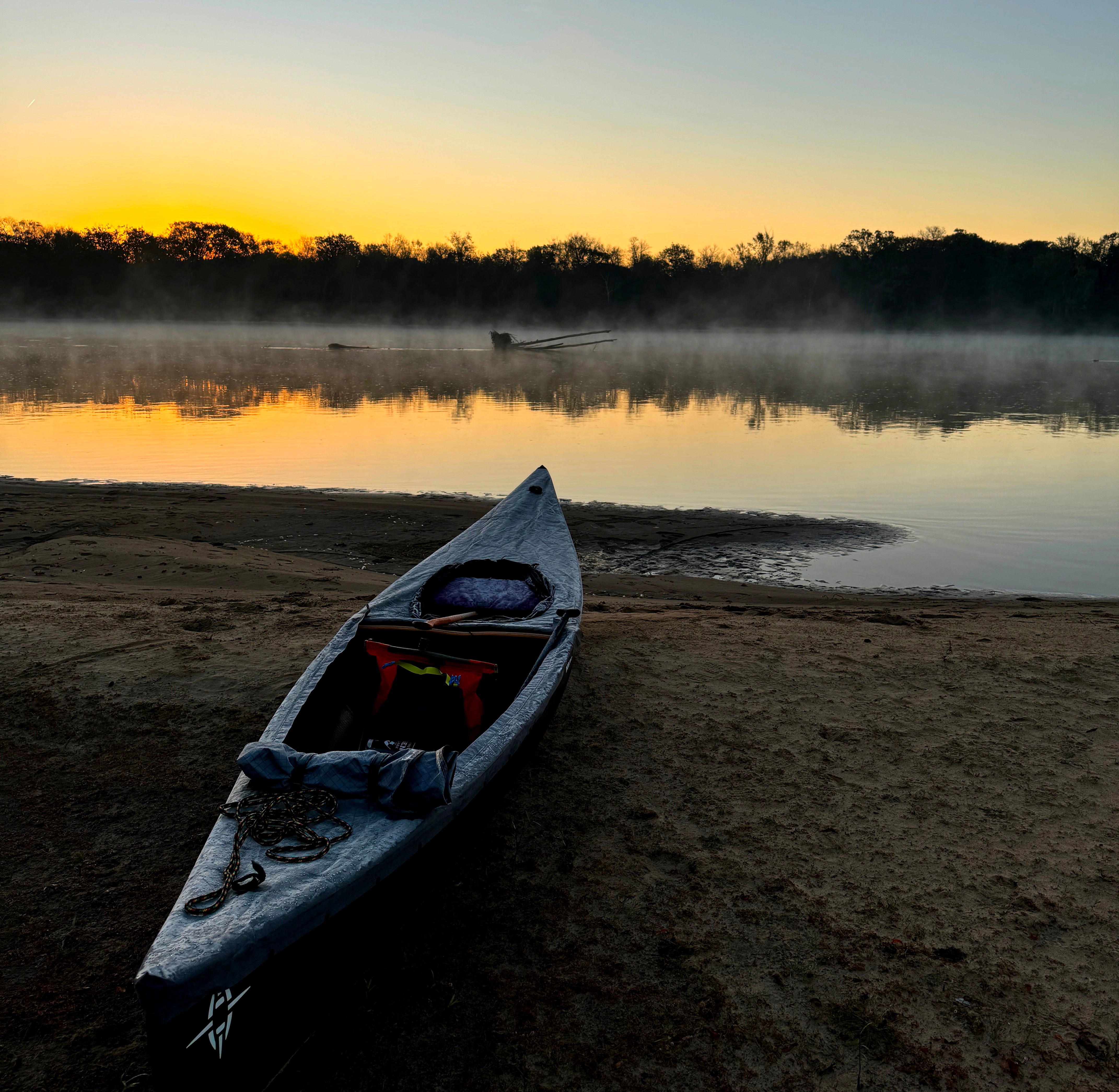
There is a feeling of complete freedom when you realize everything you need is contained in this enclosed space. I first felt it when backpacking on the John Muir Trail in the High Sierras as a Boy Scout 50 years ago. Everything I needed was on my back, mostly; we still shared carrying food to balance things out within the group. But if I wanted to, I could be self-contained.
In a canoe, I dare say it’s better. Not that backpacking is not self-sufficient, especially for those doing through hikes on the AT or Pacific Crest Trail. But while backpackers are shaving ounces, I’m adding pounds. A cast iron Dutch Oven ain’t happenin’ with a backpacker. With a canoe, I’m eating cobbler while the backpackers nibble dried fruit. Not only am I self-sufficient, I’m self-contained. I never really get the feeling of settling in while backpacking, but when I set up camp on a river, I am building a psychological home for the time I’m there.
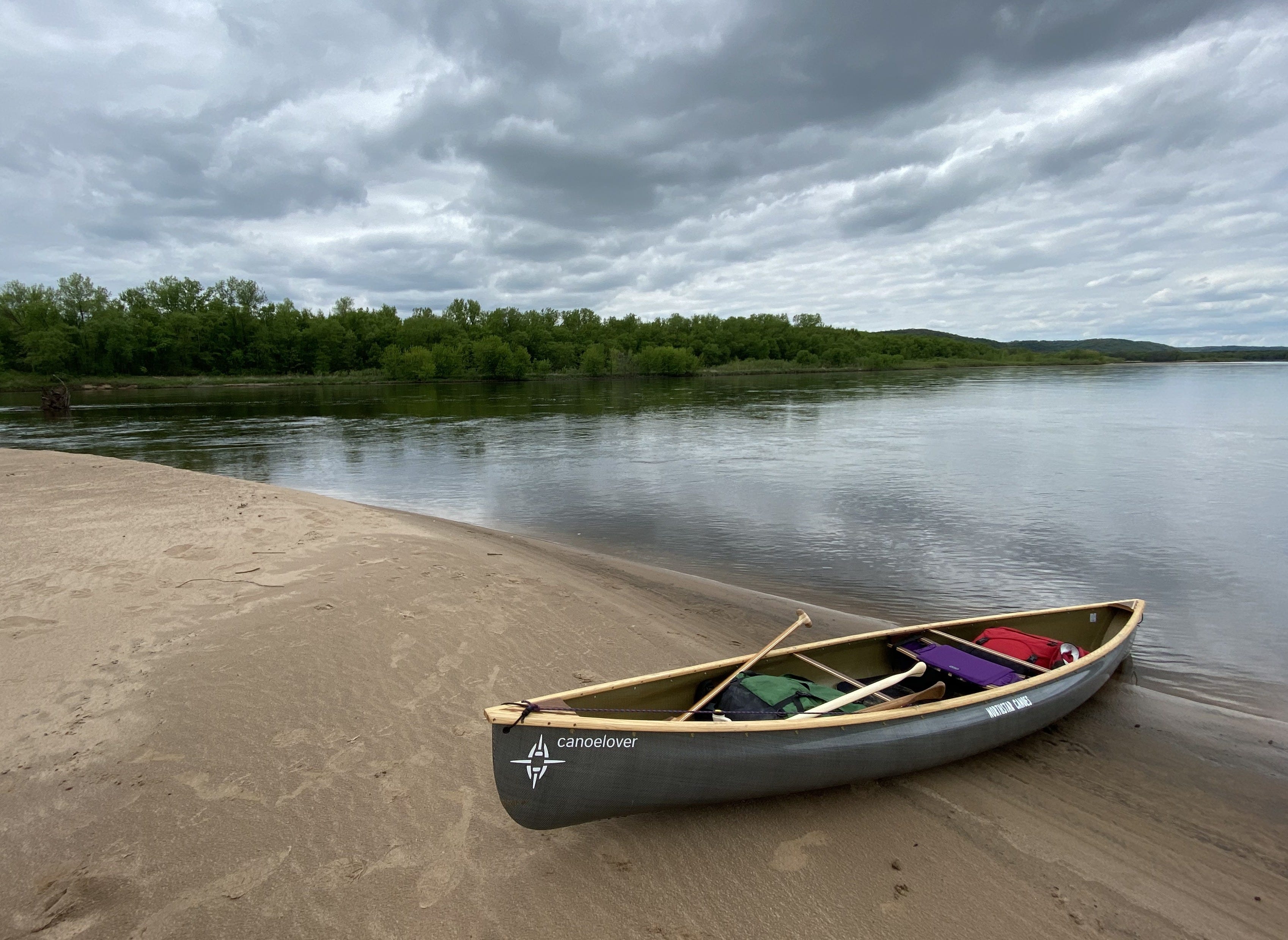
There are many opinions about solo travel, and not just in a canoe. I had a heart attack that I only survived because I was ten minutes from a cardiac trauma center, however the idea of risk when paddling alone is not always forefront in my mind. Yet, a tendril of it is there. It doesn’t make me anxious; I’m in better shape now than three years ago, and there are zero signs of any permanent damage. The likelihood of anything happening is less now than three years ago.
Yet, there it is, in the wings, like a Stage Director. Hey, be careful out there.
I don’t buy the old no risk, no reward axiom; it’s too absolutist. I would rather hold that you have to be willing to accept some mitigated risk in order to find something you wouldn’t find otherwise. A small risk can bring a big reward.
It was a fall trip, so I had packed my winter bag, good to well below zero. While that was a bit much more than necessary, it’s better to overkill than to be overkilled. I took my Whelen lean-to, a perfect shelter for fall canoe camping.
With just a small, mostly smokeless fire in front of it, the Whelen becomes a giant reflector oven, baking the occupant with a luxurious heat, allowing indifference to the frigid gusts that play just inches beyond the edge of the creamy white canvas.
It was a glorious fall day. The clouds were out in force, but the sun peeked through at times, illuminating the bluffs in all their splendid fall color. There was singing for sure. I was not in a hurry; I had plenty of time if all went as planned. There was a breeze blowing upstream, which seems to quite often be the case with the Wisconsin River. Nothing to concern me at that point.
Poking around sandbars and walking the shoreline produced a personal record of four turtle shells, one of them in perfect condition. I usually have good turtle shell karma, but four in one trip? I was dumbfounded.
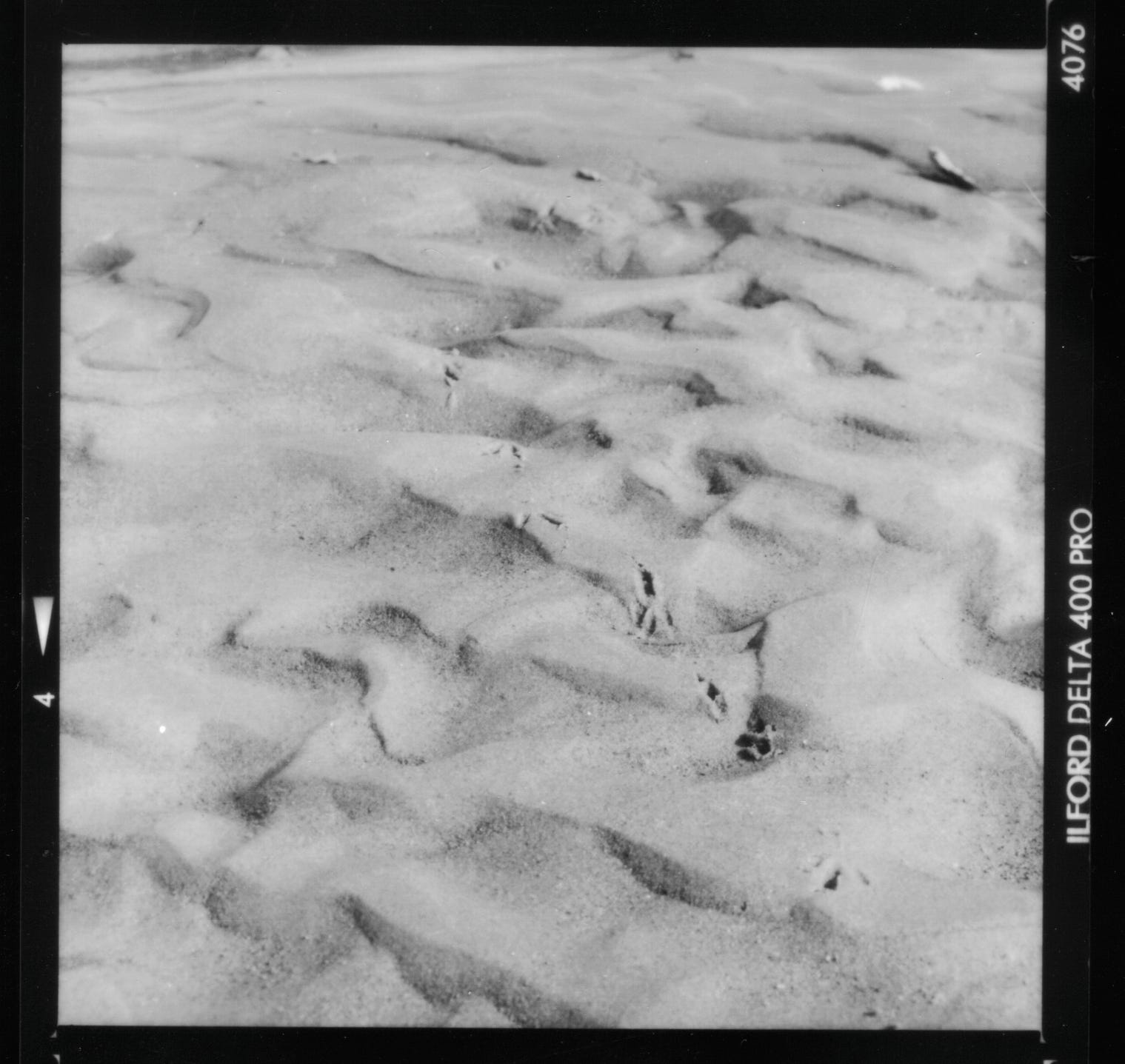
I also walked a great deal along the edge of the islands where the sand was perfect for capturing tracks of animals, and saw evidence of abundant bird life. Heron tracks are my favorite, big three-toed claws that look like a peace sign without the circle drawn around it. I took a stick and transformed some of the better tracks into heron peace signs and moved on.
Eventually I knew I would have to stop, and the wind was starting to pick up a bit, so I picked a campsite on the downstream side of an island. It wasn’t optimal for weather protection but it had a great view, so I decided I’d make camp, pitching the Whelen first. Once I had it staked down, the wind started blowing in earnest, and it was clear a long, cold blustery night was in store.
As I set up camp, I was fatigued and started to feel loneliness creep in. I prepared dinner slowly and attempted to be present and enjoy the moment. I cooked and ate a good supper of lamb steak (cast iron pan!), apples and cheese, and drank hot cocoa. I think I crawled into my bag at 8:00, as it was already black as pitch, and a light drizzle saturated the canvas so it swelled up good and tight. I lit a fire, and soon it was ten degrees warmer in the space under the lean-to. It was a cheerful space.
Then I had the thought: You’re not lonely, you have yourself.
Well, there ya go.
I wasn’t lonely. I was with my own company, and it felt peaceful. I didn’t want that peaceful feeling to leave, so I kept putting wood on my fire, not just for the warmth, but because campfires are cheerful.
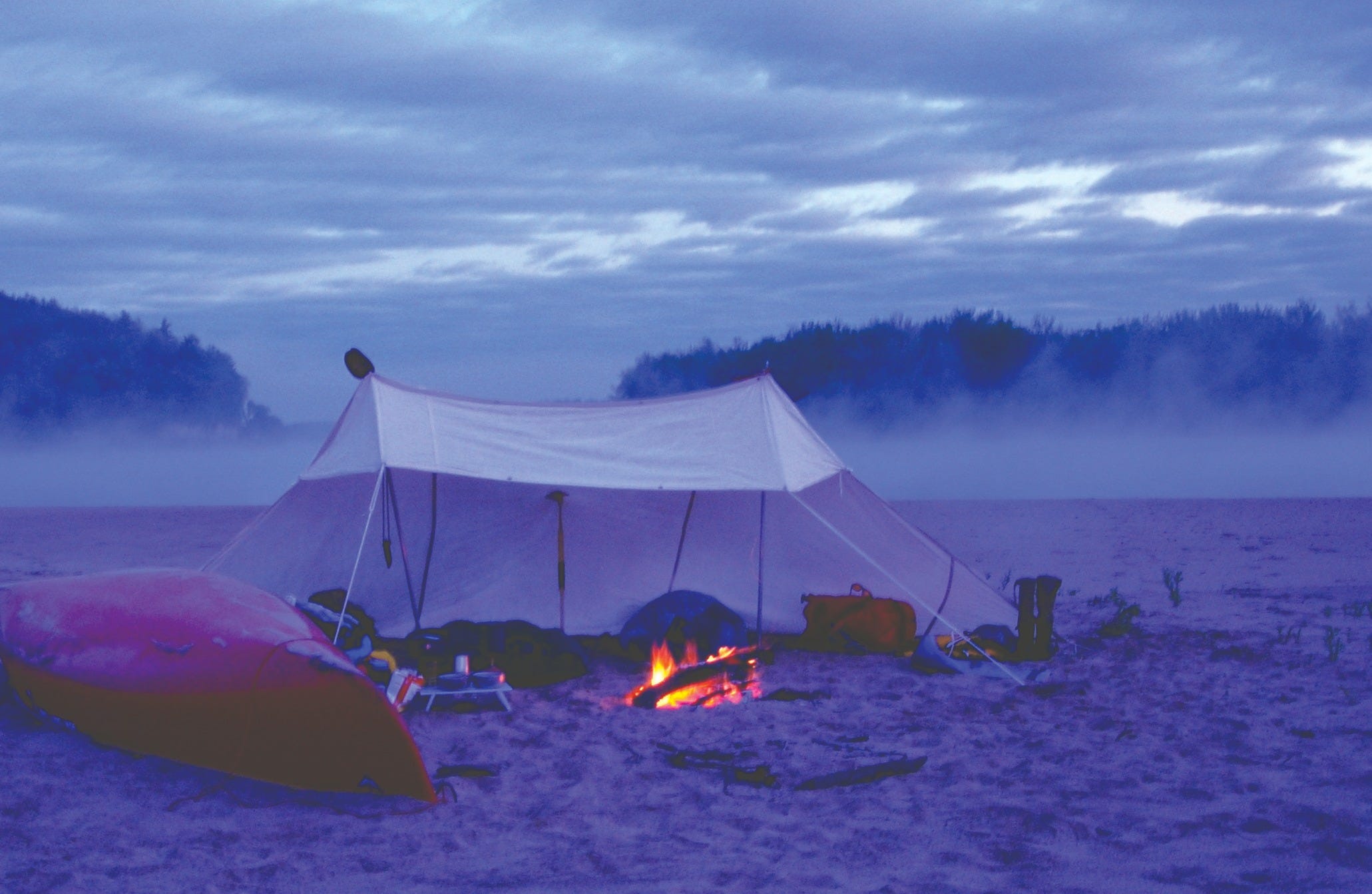
The next morning I was up before light to eat and take advantage of the lull in the wind. I dug out the lean-to, the edges partially buried by blowing sand, broke camp in record time, despite the three primes necessary to start my stove and make some hot water. It wasn’t supposed to be below freezing, yet here we were. The canvas was crunchy and stiff and there was frost everywhere.
As I paddled down toward the take out, the wind intensified, and whitecaps appeared on the surface of the river. It was still over twenty miles to the car. Muscoda was about four miles away, but the car was at Boscobel.
The GPS I carry mostly for fun actually came in handy. I learned that I was paddling hard with a full load and making a good 1.3 miles per hour, speed going to zero if I stopped paddling. With delays every half-hour for hand warming, that would make for a very long, cold, potentially dangerous day.
I stopped just upstream of Muscoda in a small, protected cove and lit a small fire while thinking about my options. Watching the whitecaps move upstream, it was an easy decision. I called my wife and told her I was cold and getting colder, and I had taken waves over the bow of the canoe. I had a spray cover on the boat so no water came in, but it was enough to spook me a little.
Stephanie told me she had just been praying that I would make wise decisions.2 She checked the weather report, which showed 35 mile-per-hour winds gusting to 40 from the west, straight up the river. I said I would meet her at Muscoda in about an hour and a half, said our goodbyes and I put out the fire.
The wind, if anything, had intensified and cautiously I picked my way along the shore, trying to stay in water that was deep enough to float me but still take advantage of the tree cover. It took me an hour to get to the take-out, and I was already bone tired. Seventeen more miles would have been too much.
I lit the stove in the shelter of my canoe and waited for water to boil. Looking downstream, I saw whitecaps moving upstream against the current and leaves were being stripped off the oaks in the park next to the take-out. I involuntarily shuddered.
I discovered this quote from Anne Lamott long after that trip. “There is almost nothing outside you that will help in any kind of lasting way, unless you are waiting for a donor organ. You can’t buy, achieve, or date serenity. Peace of mind is an inside job, unrelated to fame, fortune, or whether your partner loves you.
An inside job. Seems like all my favorite non-philosopher philosophers talk about life that way, like Don Fogg’s statement that the real work is within. Internal struggles are solved internally.
Thomas Merton, in his book Thoughts In Solitude, wrote that “The man who fears to be alone will never be anything but lonely, no matter how much he may surround himself with people. But the man who learns, in solitude and recollection, to be at peace with his own loneliness, and to prefer its reality to the illusion of merely natural companionship, comes to know the invisible companionship of God.”
An hour or so later my rescuer showed up, relieved. She shuttled me down to Boscobel so I could grab my truck and head home. My only regret is that we couldn’t drive together.
I enjoy St. Thomas Aquinas’s Dialectic. You pose a question/make a statement, come up with answers, then raise opposing arguments, then pick those apart, then go back and and refine the opposing arguments (if you can). The questions that Aquinas dealt with were along the lines of spiritual mysteries. Sometimes my questions are equally profound. Sometimes they’re just fun. I believe maple trees were created just so I can put syrup on my pancakes.
I think she says this prayer a lot.
Beautiful! Thank you Darren.
Great story and reflection Darren! Thank you for sharing.