
the real work is within
A lesson in mindfulness from Don Fogg.
I always have a couple of projects sitting on the back burner.
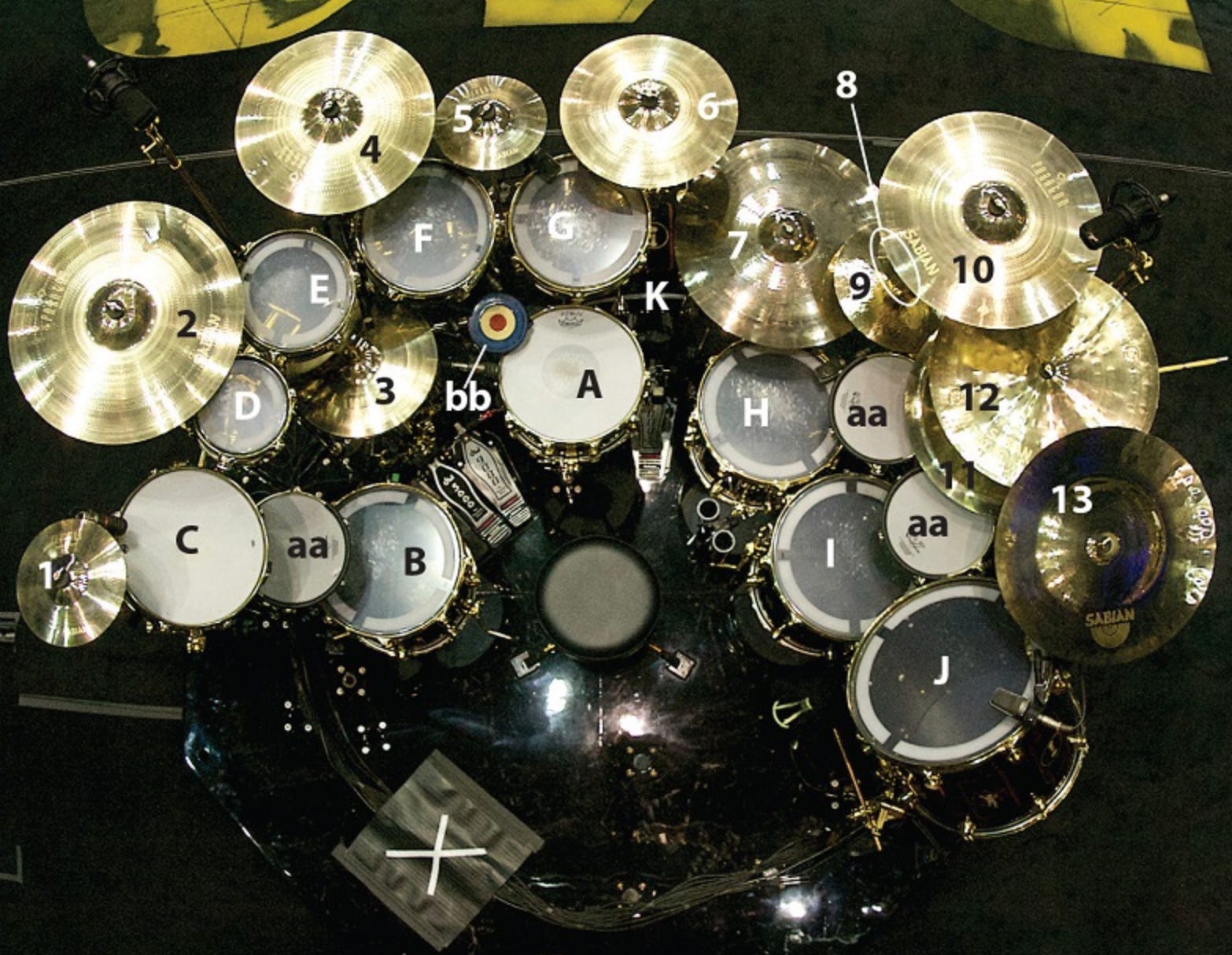
Thing is, I have many more back burners than front burners. I think my project stove would look like Neil Peart’s1 drum set, with a snare drum (A) representing the front burner, and the twenty or so toms and cymbals representing the back burners.
The back burner projects are usually wood, metal, or in this case, words. I’ve been wanting to talk about Don Fogg and his philosophy. It has affected me deeply over the past two decades of blacksmithing, woodworking, and life in general.
Don Fogg was a mentor of my blacksmithing mentor, Larry Cooper. Don’s website (no longer online) was so impactful that I downloaded it before he took it down for good. Don is one of the most talented bladesmiths who wielded a hammer.
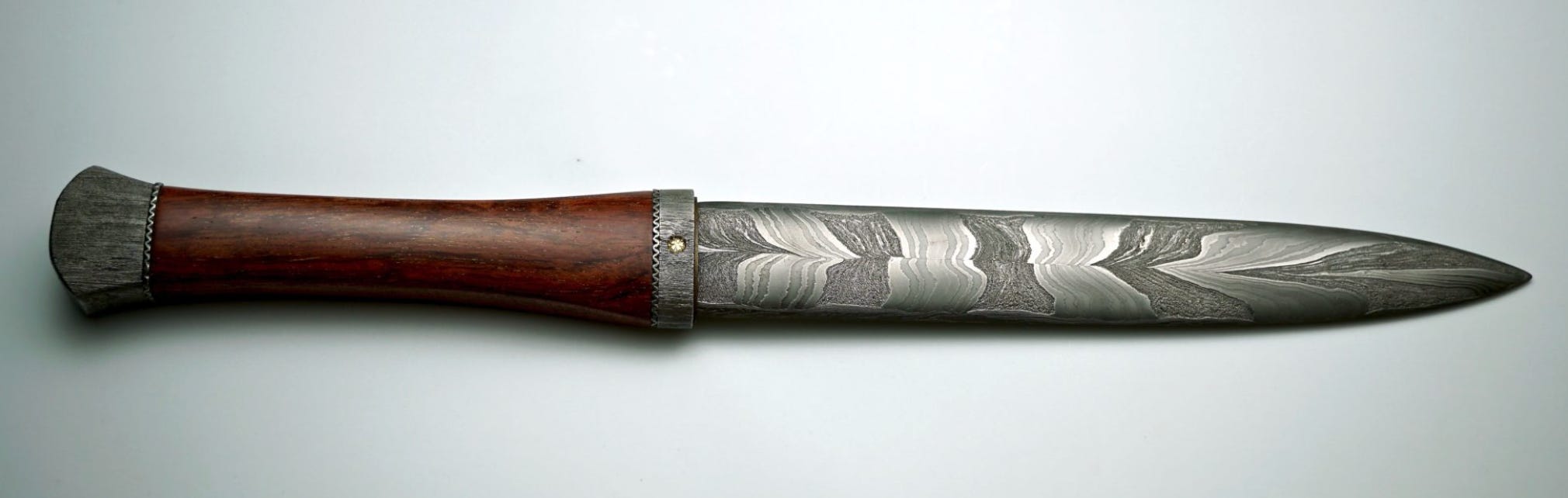
Don was one of six of the first bladesmiths to receive the title of Master Smith, and to this day there are only about 125 bladesmiths who have passed this arduous test, administered by peers in the American Bladesmith Society. He has since retired and is in the ABS Hall of Fame.
The work is to reach beyond ourselves, to let go of what is safe and stretch. The more we conquer our little self, the stronger and clearer we become. For me, making things with my hands has provided a way to see the process…There are pitfalls to this approach though, and the most obvious is that we identify ourselves with our work, failing to remember that the real work is within.
Identifying yourself with your work can be a real hindrance to personal growth. I cringe when people call me Mr. Rutabaga, and I correct them swiftly, saying no, my name is Darren, and I happen to be the current steward and proprietor of Rutabaga. To call myself Mr. Rutabaga would mean that when I leave Rutabaga someday, I’d be Mr. Nothing.
The real work is within.
Success is a word that of late has become a synonym with material wealth. That dude is successful; he drives a really nice Beemer.2 I think a better way to look at it is that you achieved a desired outcome. I am successful when what I want to accomplish is done to my satisfaction. While one needs some income to survive, acquisition of stuff/money/whatever is not a noble goal in and of itself, unless it produces the desired outcome. Having more for the sake of having more has never made anyone truly happy.
I believe that when I’m mindful, I’m succeeding. When I’m sliding into sloppy or unfocused behavior, I’m usually not successful. If I get lucky and a piece I’m working on comes out okay, it’s still not a win in my book.
I like making traditional paddles, but I admit to ruining some fine pieces of wood before I made one good one, and I will probably do it again, unless I take a good, mindful look at what I’m doing, and be fully present.
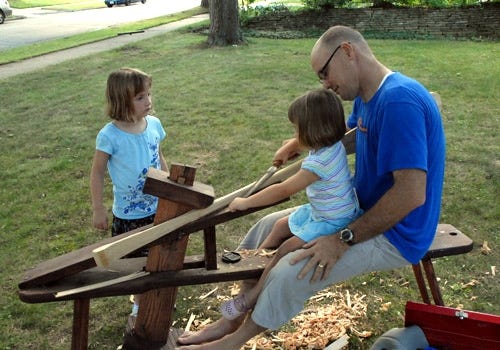
The last time I pulled out a piece of rough cut cherry, I made a mistake. I took the piece of wood, sketched a few lines on it, cut away some big chunks with a Japanese pull saw, and started digging in with a drawknife. I wasn’t thinking about what I was doing, I was just hogging out wood to get a rough shape. The drawknife is an effective tool and I scraped and pulled for ten or fifteen minutes, flipping the blank back and forth on my shaving horse. I drifted off to not being present, thinking about something else.
When I came back to myself, I realized I had taken off way too much wood on one side of the grip. That piece of cherry, for all intents and purposes, was reduced to kindling. I had taken a piece of beautiful wood and instead of liberating the potential paddle from its encasement, I had defiled it. I felt like a surgeon who kept cutting after the tumor had been excised, except in this case, there would be no dramatic consequences and no malpractice lawsuit.
Still, I felt like crap. It wasn’t that I had ruined a good piece of wood, that was just annoying. What really bothered me was my complete lack of mindfulness as I slashed away at the wood, hogging it off like its presence was an annoyance, just a barrier to my real goal of getting out the pattern-making rasp and fine-shaping the grip.
I was totally in the future. I was nowhere near the present. As a result, I didn’t get to carve that grip into what I wanted. I was thinking about tying my shoes and didn’t even have my socks on yet.
I put my work away for a time, as the frustration and anger with myself would not be conducive to quality work, so I left that piece of wood for another day.
The next time, a few weeks later, I was mindful.
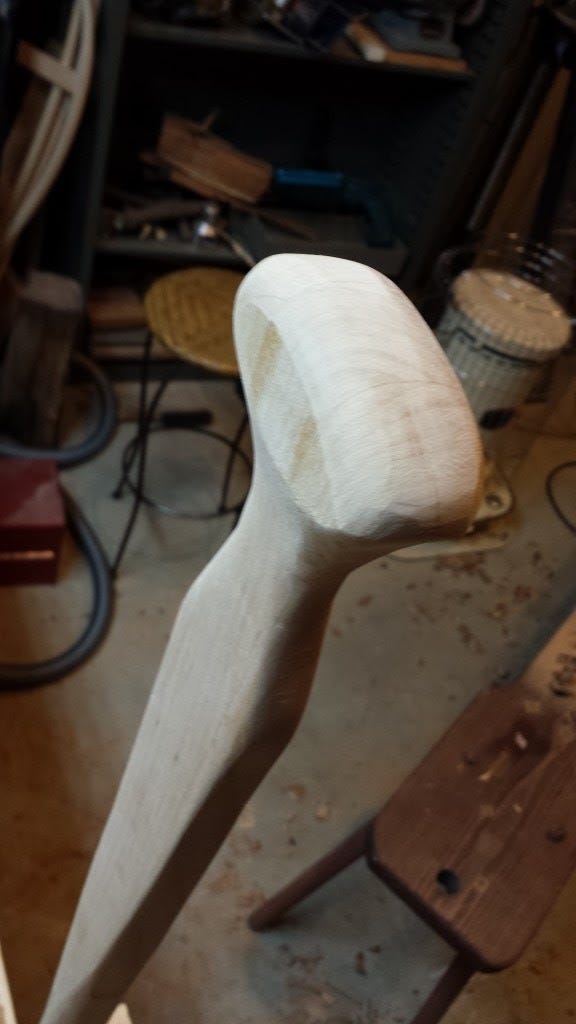
A little slower with the drawknife, a little slower with the plane, a little slower with the rasp. Sanded with 120 to show flaws and imperfections. The photo above is the outcome of the first shaping. We’re symmetrical, pretty clean, and ready to proceed (carefully) with the spokeshaves and rasps.
Other than wasting a piece of cherry3, it was a good thing that I messed up the first one. It reminded me of how easy it is to lose the way. As Don Fogg says, The tool works at both ends. The blade works the material, and the handle works the maker. There’s a feedback loop that is critical to skill development.
When I hit a piece of hot mild4 steel, I can feel through the handle that it’s cooling off and I need to get it back into the forge. If I am tempted to work through the cooling metal and just hit harder, it can create cold shunts, where metal moves in a weird way and creates areas of weakness. If the metal is hot and therefore more elastic, it doesn’t happen. I can sense how tool steel works differently, and needs more heat, and is harder to move.
That didn’t happen overnight. Tens of thousands of blows taught me through direct feedback how different metals work. And the same thing is true with metal as with anything: a moment of careless, mindless work can mess up a lot of careful work.
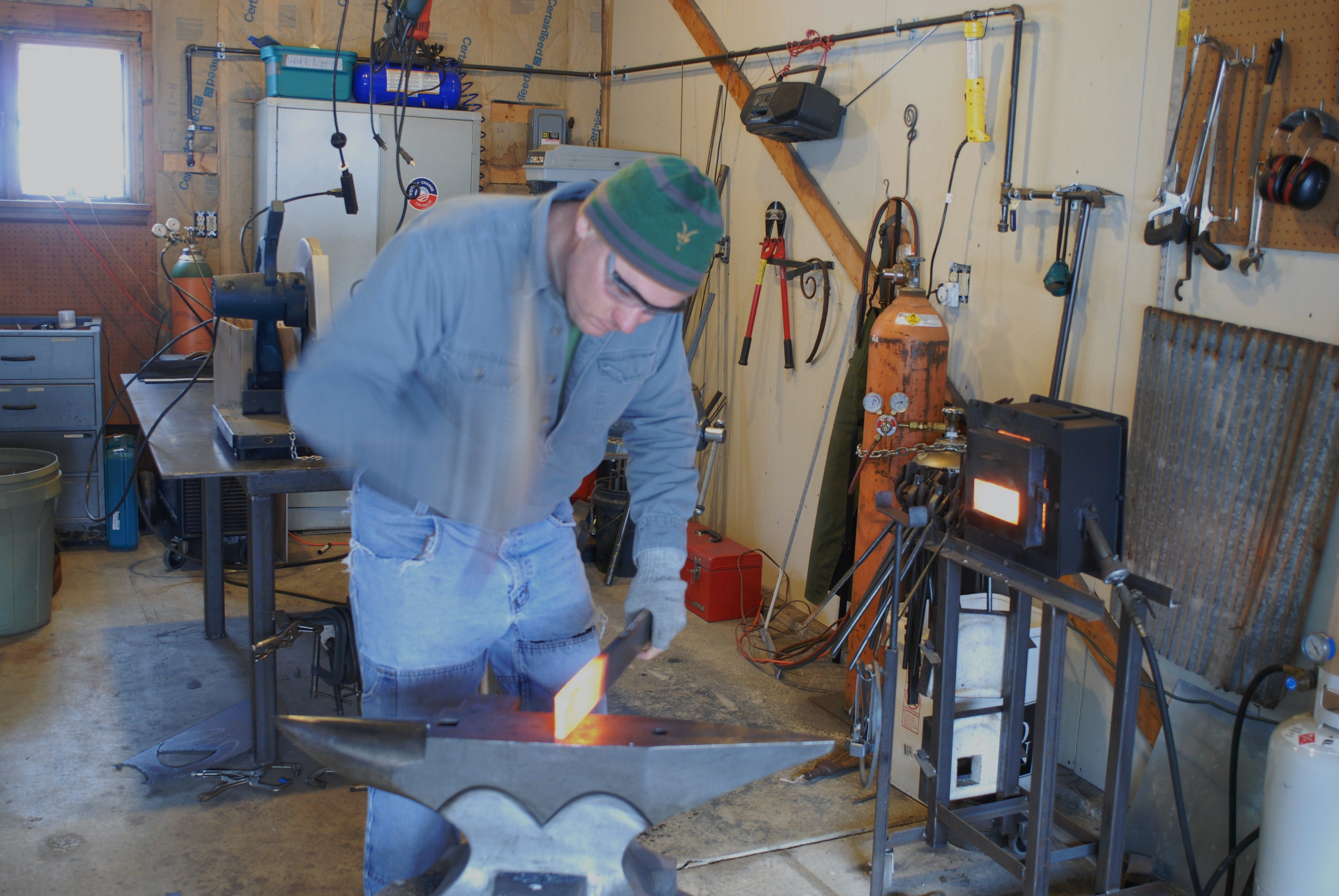
Others have a tendency to identify you with the work that you do as well. The way that others respond to you can have a huge effect on how you perceive yourself, it is another form of feedback and is very powerful. Knowing yourself is the best shield against the assaults of the world.
All this from a bladesmith. Sounds more like a philosopher. Well, you can be both, and I would imagine doing the work within would make you both a better craftsman and a better philosopher.
I have one knife on the back burner, but I don’t have the consistent blocks of time that it takes to get into the zone. There’s no way I’m going to even start it, because I’ll hurry to finish something and mess it up. So it’ll stay there until I feel confident that the tool will be working at both ends.
Thank you for the reminder, Don.
RIP, Neil. Geddy and Alex will keep Rush great, and Anika Nilles is a virtuosa, but it’ll be different without Neil. Cancer sucks.
That bro financed the Beemer for 84 months. So not successful, just unaware of the effect of car loan interest rates.
I won’t waste it. I’ll make spoons or some other trinkets.
Mild steel (A36) is just old melted down cars and scrap that’s soft and easy to work, but bad for anything that has to hold an edge. Ornamental only, but it’s what I work with most of the time that’s not knife stuff.