
not parmesan
It's the real stuff.
We were ready to leave La Serenissima. I liked Venezia, and paddling there was cool, but I was ready for fewer people. At least, fewer people per square foot.
When planning our trip, we decided to spend some time in a smaller town, and our love of prosciutto di Parma nudged us in that direction. Bologna is wonderful, but we wanted to go closer to the source of three of our favorite foods: Parmigiano Reggiano, Prosciutto di Parma, and Aceto Balsamico—that is, balsamic vinegar.
Before we go any further, parmesan is not the English translation of parmigiano. Parmigiano Reggiano is a DOP product, which stands for Denominazione di Origine Protetta. In English, that’s PDO: Protected Designation of Origin. If it isn’t made within a specific zone of Emilia-Romagna, using milk from certain breeds of cows1 eating a specific diet with no exposure to antibiotics, and made with exactness using techniques handed down for centuries, it ain’t Parmigiano Reggiano. It’s just some random hard cheese, and has no business being called P.R. In Italy, it can’t be. There are consequences.
But Kraft Foods (“foods”) has an excellent marketing department. Kraft Parmesan contains up to 4% cellulose powder to prevent clumping. That’s basically very tiny wood chips. And while useful for preventing clumping, it also means you can use 4% less actual cheese. If the canister says “100% grated cheese,” that’s technically correct. The cheese that is grated is 100% cheese. Then they add the cellulose.
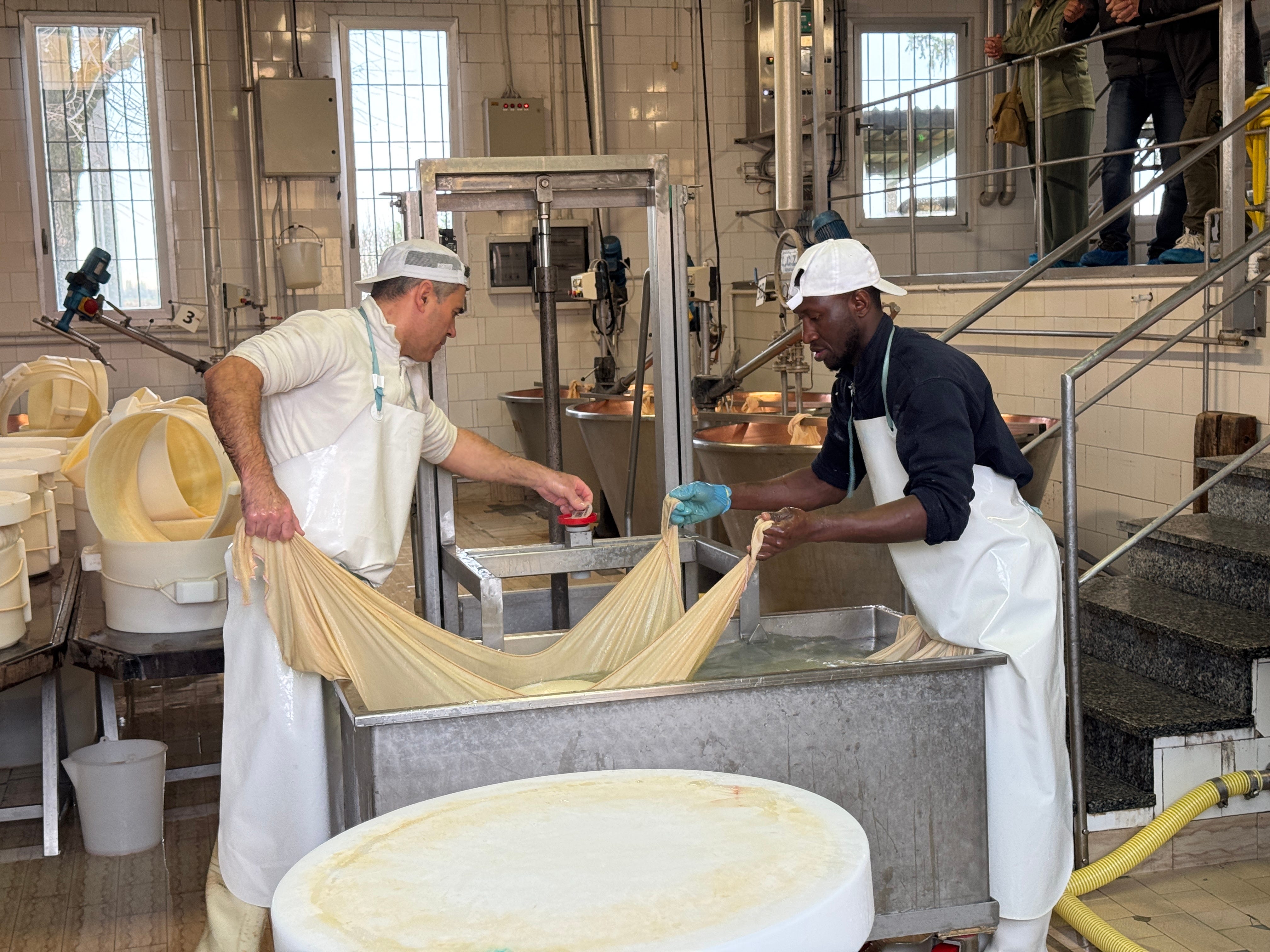
The best way to guarantee a cellulose-free product is to buy solid chunks of Parmigiano Reggiano and grate them yourself. An added plus is it actually tastes good. The other stuff; not as much. Costs more, but you use less.
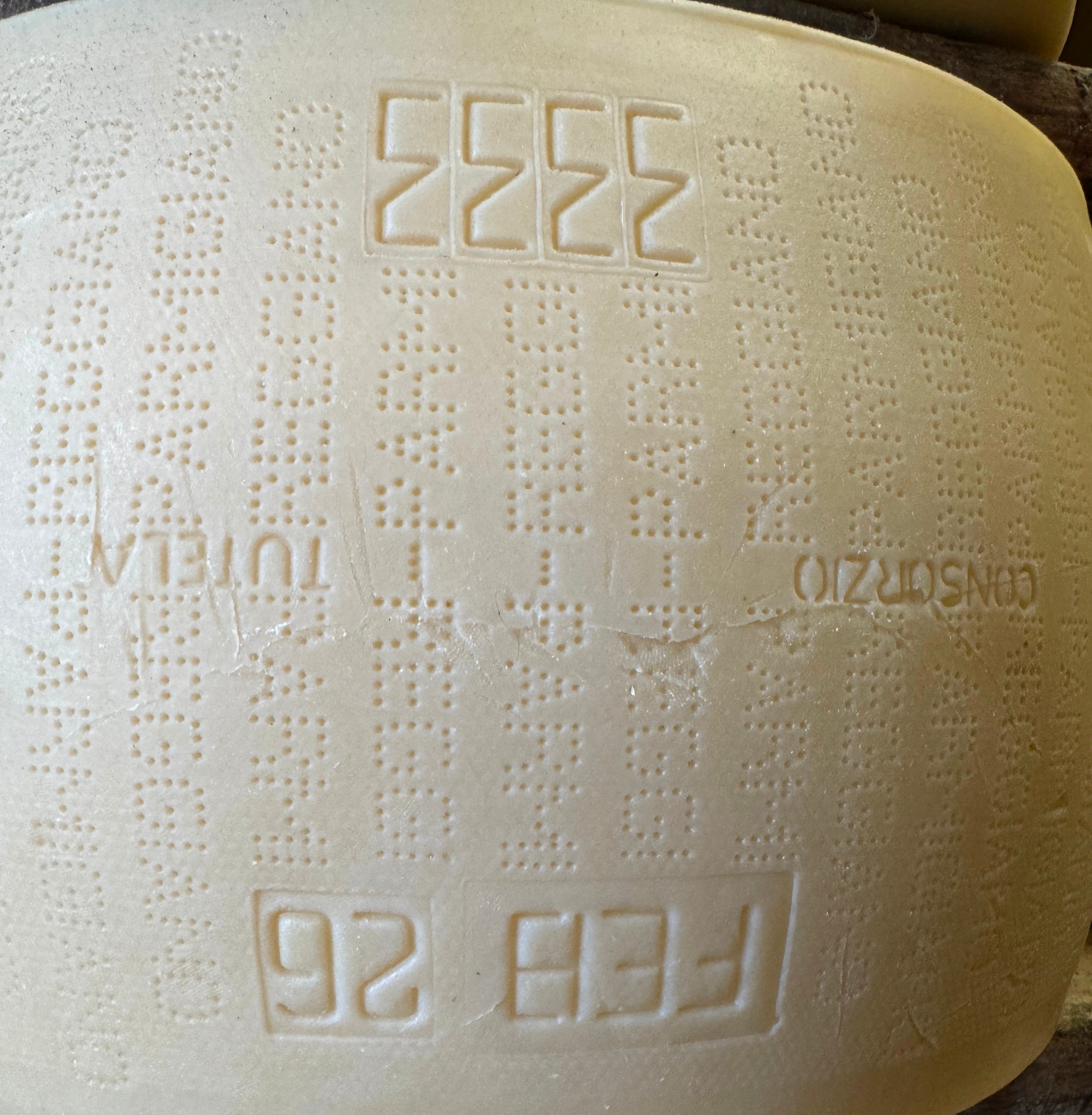
Exactness is important in Italian food. Quality is important. Rules are important. Driving and parking, fewer rules, but when it comes to food, lying about stuff is criminal. The Consorzio del Formaggio Parmigiano-Reggiano checks production at every point and violators can lose their ability to make the product under review. If the inspector detects a defect, the whole batch gets pitched. That can bankrupt a cheesemaker. So unlike parking, driving, and taxes, no one cheats at cheese.
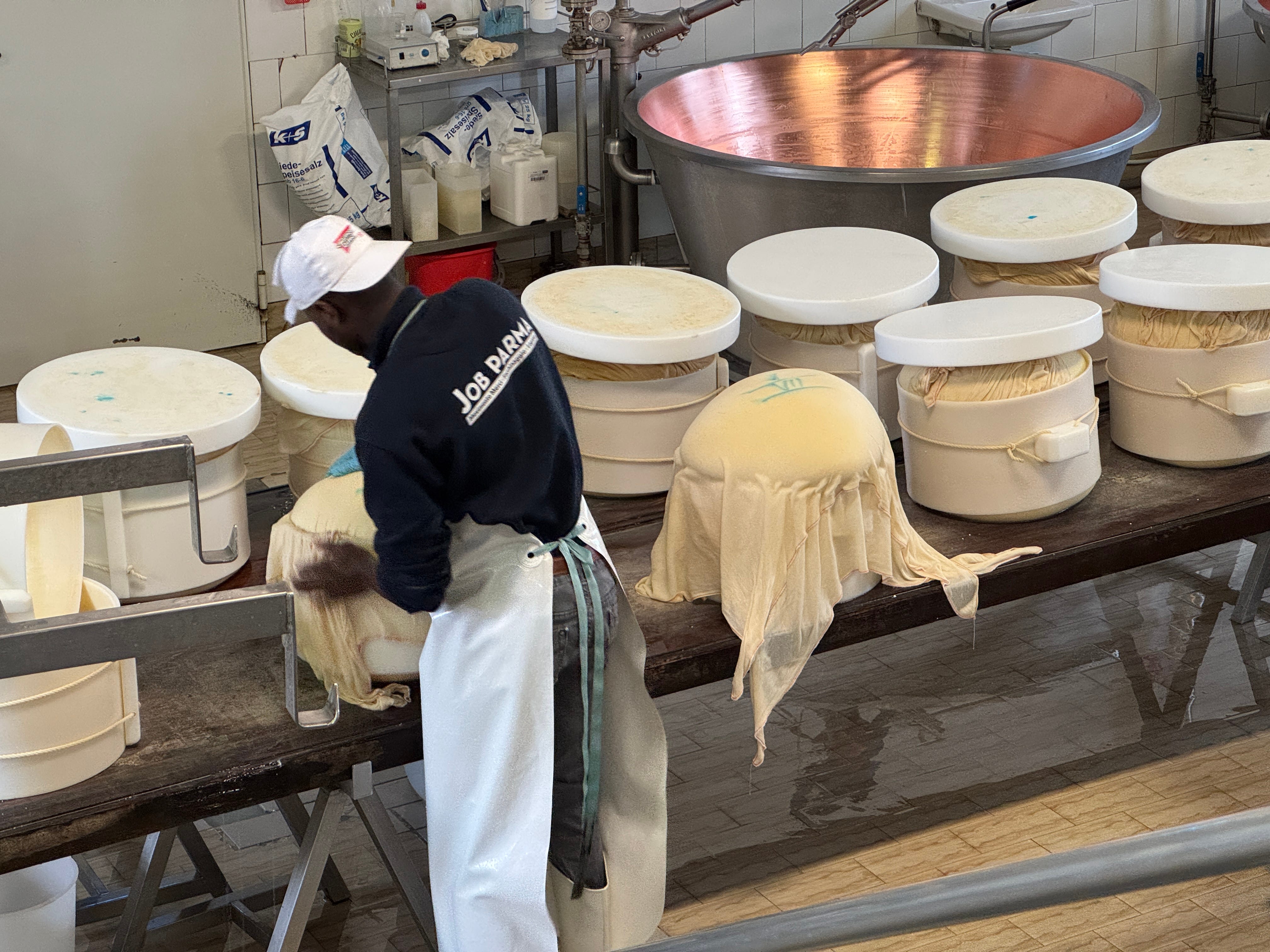
This process is labor intensive. After a wheel sits between 12 and 18 months, it will be graded into several categories by Consortium inspectors. The inspector uses a small hammer and taps the wheels. A uniform thunk means no defects, and that’s the top grade. That can be exported, and the wheel is fire-branded in an indelible way. If the thunks aren’t uniform, that can be a second quality cheese, and I doubt I could taste the difference. The stuff that doesn’t pass that test has the rind removed and it absolutely cannot be called Parmigiano Reggiano, but will be ground up and used for the sprinkling stuff for supermarkets.
There is a huge financial incentive for the makers to be as exact as possible. The drop in price from a first to second quality wheel can be 20-30%, so a first quality 30 kilogram wheel might drop from a value of $800 to $600.
In late May 2012, two earthquakes in Emilia-Romagna toppled racks holding 300,000 wheels of cheese, many of them between a year and a year and a half old, their most vulnerable state. Some cracked, rendering them useless unless they were sold quickly before they started oxidizing. Some just hit the ground, but that was enough to automatically downgrade them to second quality. The economic hit to the area was over €200,000,000, or $250,000,000 — a quarter of a billion dollars.
The community rallied, and everyone in Italy ate cheese like it was going to be their last wheel. Chef Massimo Bottura, owner Osteria Francescana, one of the top 50 restaurants in the world, rallied chefs from all over the world to create dishes to use as much Parmigiano as possible as quickly as possible. His riso cacio e pepe2 is made with a stock created from damaged cheese. We made it, and it was great…but not if you’re on a low salt diet.
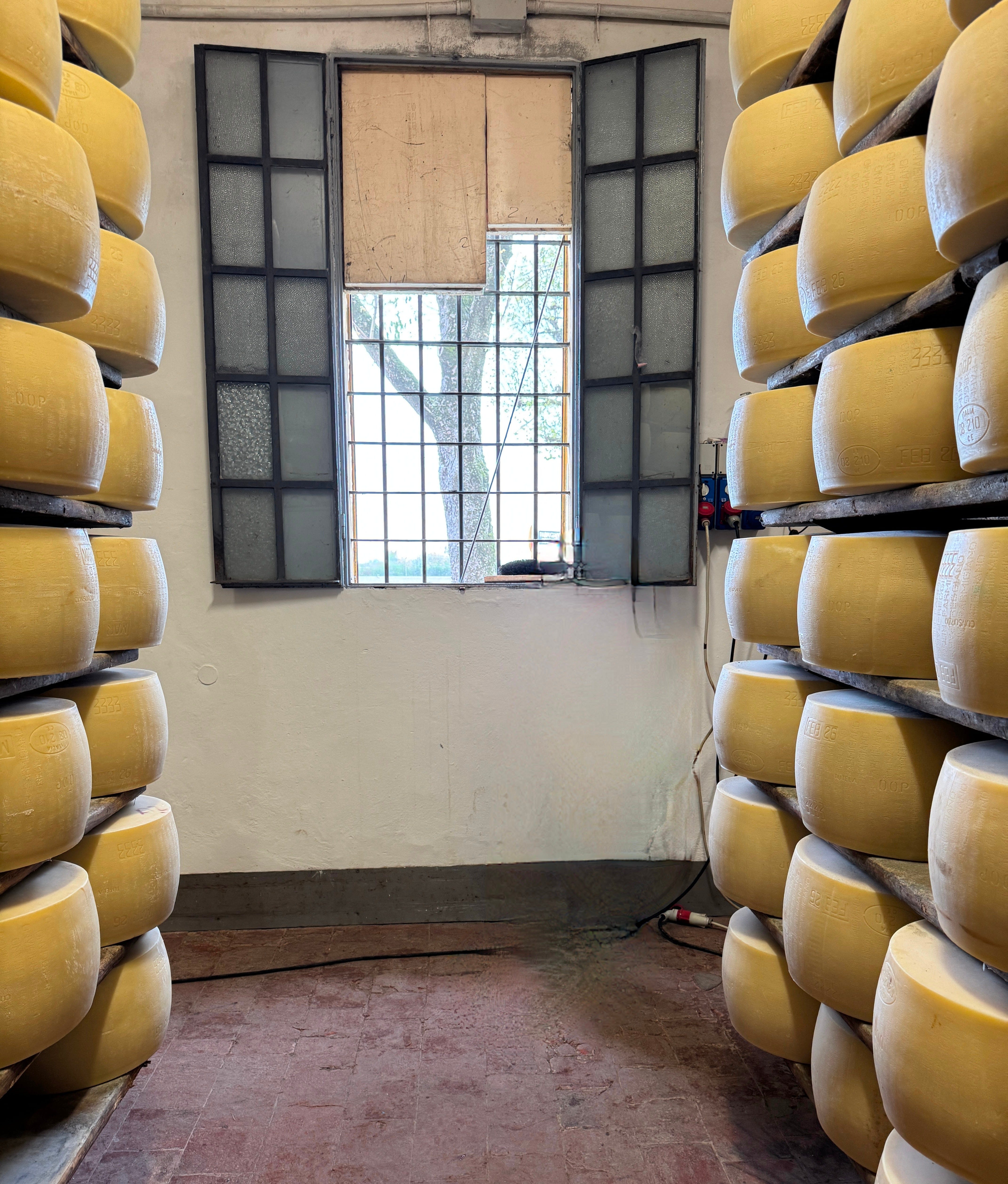
Our tour guide, Claudia, has a degree in Gastronomic Science from the University of Parma. I feel that Gastronomic Science sounds like the interaction between people and their food.
The University of Wisconsin has a degree in Food Science. Food Science is great, and I have friends who have Food Science degrees and do good work. That said, I think that small change in nomenclature shows how Italians think about food vs. how most Americans do. They’re about the eating: we’re about the food. We spend a lot of time trying to make food more shelf stable, which is useful, of course. Flavor, in my opinion, often takes a back seat. Not that we want to make bad food, but if there’s a choice between better flavor and better shelf life, I think we lean toward the side of longevity.
Claudia was delightful and enthusiastic and explained thoroughly how cheese was made. We’re from Wisconsin, and we know most of this already. The differences between cheddar and Parmigiano are subtle but significant. The curds for cheddar and other cheeses in that family are cut after coagulation to be, well, cheese curd sized. The curd from Parmigiano is cut until it is about the size of a grain of rice. This allows more whey to escape and makes the cheese drier and harder. Curd size matters.
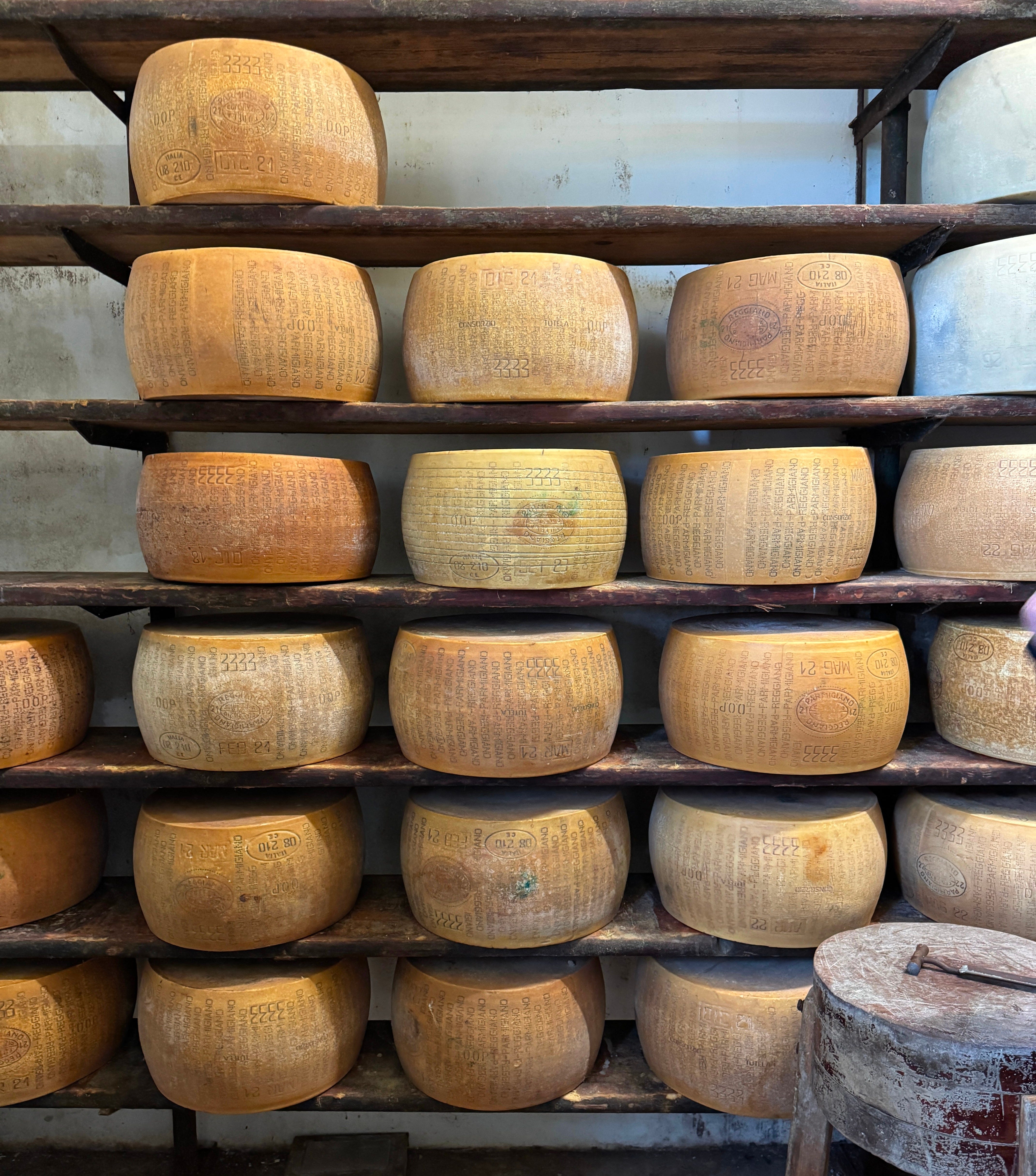
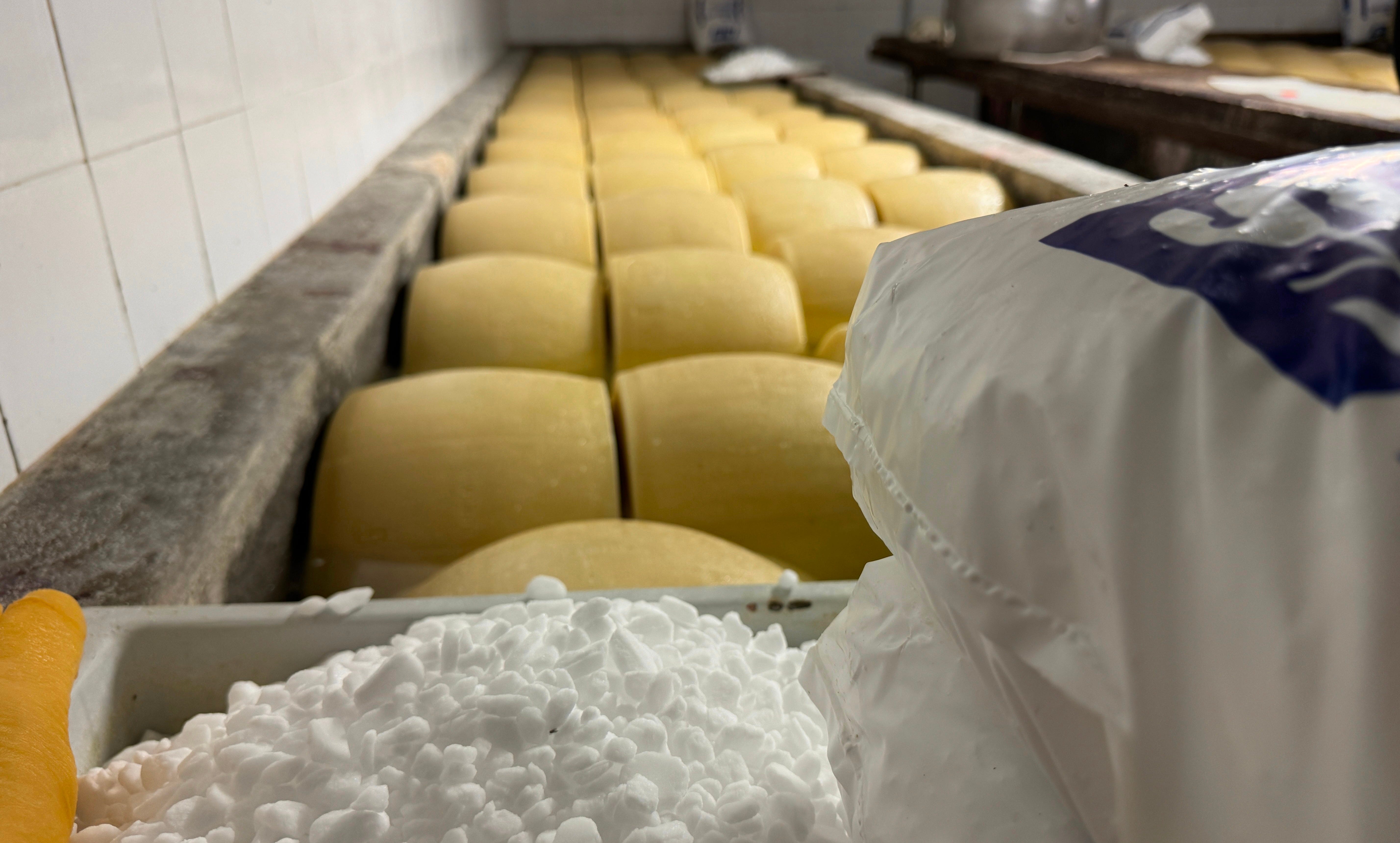
We learned all the times and aging and chemistry of how long it takes for salt to osmose to the middle of the wheel. We learned how to cut parm to maximize the flavor. We learned about firebranding wheels after they past the tests of the consortium. Then we had the chance to see for ourselves how this works in practice.
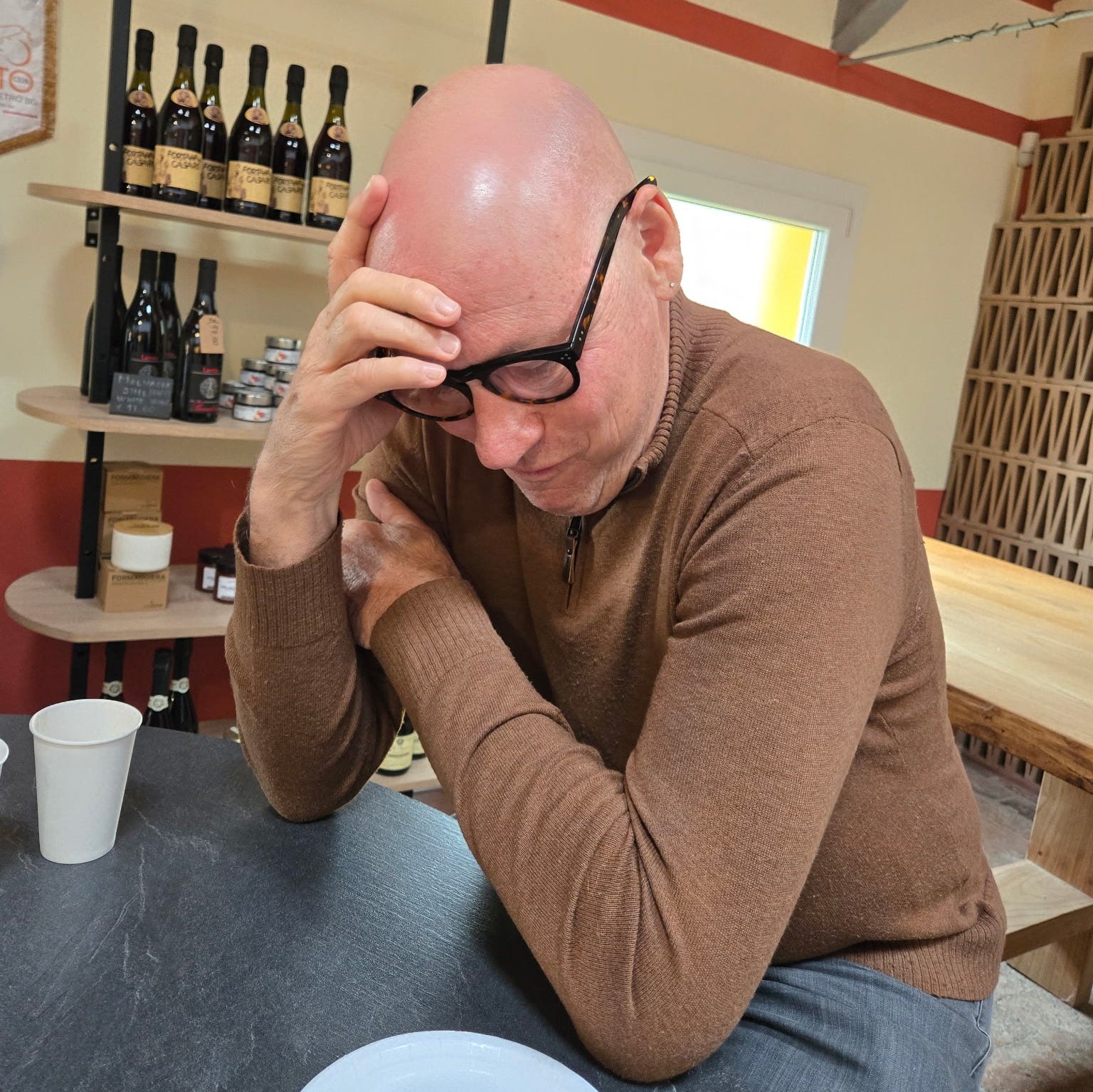
I had a moment.
The bruna parmigiano about did me in. If parmigiano can be creamy, this was creamy.
Stephanie laughs when I do this. The people serving the food often become worried that I don’t like it; Stephanie assures them this is my religious moment with food posture.
After the tour and the tasting, and the optional-but-who-are-we-kidding purchases, we headed off to another part of our trip—prosciutto di Parma.
That’s a story all of its own.
Frisona (Holstein-like), Alpina Bruna (sorta like Brown Swiss), or Vacche Rosse (Red Cows). The latter two have more fat in them and the cheese has a different mouth feel.
Story in Italian. Translate with AI, Google, whatever.
Came for the canoe stories, stayed for the cheese stories. Your sojourn into my world seems to have the same spiritual impact as my trips on the water.