
la serenissima
The Most Serene: that's what Venetians call it.
I have always given a wide berth to Venezia. Too touristy. Lots of people selling crap made in not Italy. People selling glass with a label that says This article is made to exacting standards following the techniques of the master glass artists of Murano.”1
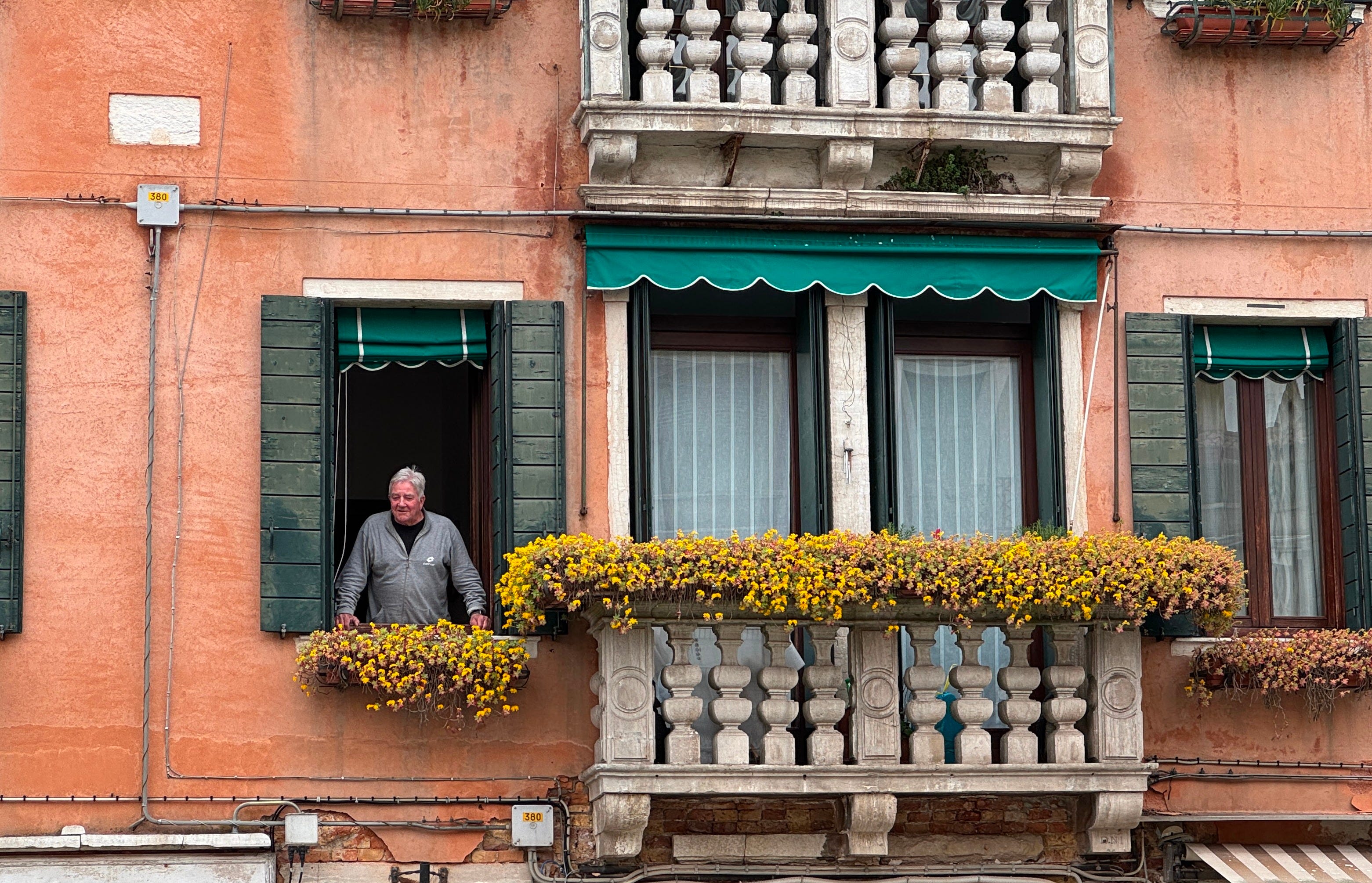
Instead, I found a lovely city that happens to have canals running through it.
I also found a city with a myriad of problems. About 35% of buildings are not habitable despite a housing shortage for younger people who are critical for the economic and cultural future of the city. Gentrification, conversion of apartments to Airbnbs, and a host of other factors are contributing to the transformation from a city with a 1500-year history to an amusement park. A 10 Euro fee is now charged to tourists making day visits, but that has just made the idea of Six Flags over Venice more apparent.
I also found a city where it’s hard to find a decent meal. With the exception of Cannaregio, the northernmost neighborhood/island, which is a lot less touristy, the food was universally meh. Portions are American sized, which means a lot of bulk for the money, but the flavors are pedestrian. The restaurants that were full of Italians were packed. It was not uncommon to see two restaurants next to each other, one packed, one empty. Even the gelato was just okay.
Even with the tourism income, which is significant, Venice still struggles to pay its bills.
But leave that behind for now. Venice has been solving problems since the indigenous Italians left the mainland to protect themselves from barbarians. Their alliances turned eastward toward the Byzantine empire, which is one reason they were so wealthy for so long. Marco Polo was Venetian and made his way all the way to China.
As Venezia grew in power, it became one of the wealthiest Republics in the Mediterranean. Due to their naval power, they traded with every country in the known world. The Renaissance arsenale produced a ship a day, using an assembly line technique and standardization of components not seen again until Henry Ford. These were not small ships. They were 150 feet long, and built by a workforce of 16,000.
Get off your not-so-high horsey, Mr. Ford.
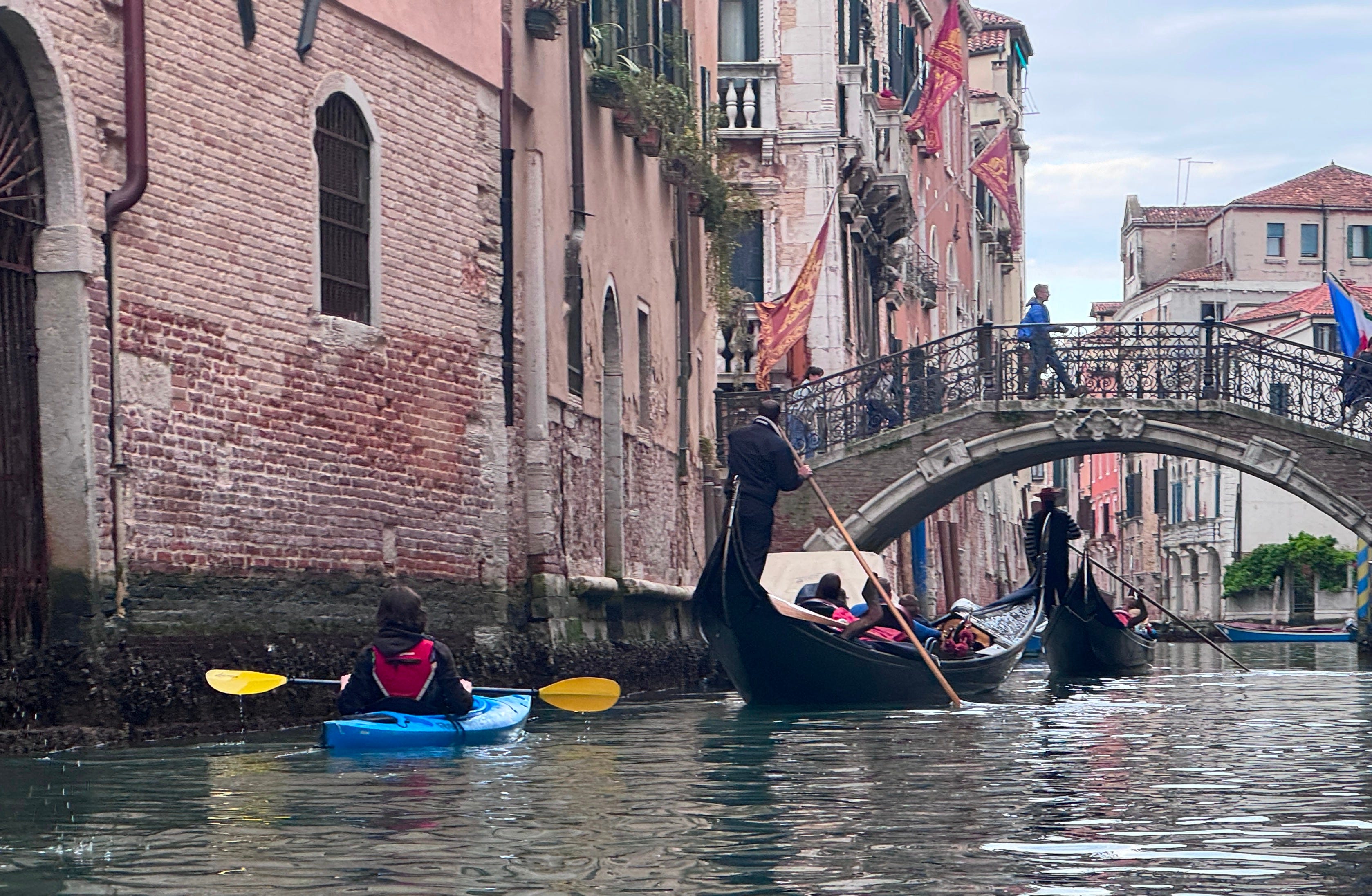
These days, the arsenale isn’t building galleys and galleons. It has a cool museum, but we were museum weary. There are, however, still boatyards where gondole are built and repaired.
The gondola is much more than the touristy ones with the high prow and stern. There are double and quadruple freight batele, the flat-bottomed Venetian SUV called a sandolo, and other specialized craft; dozens of them.
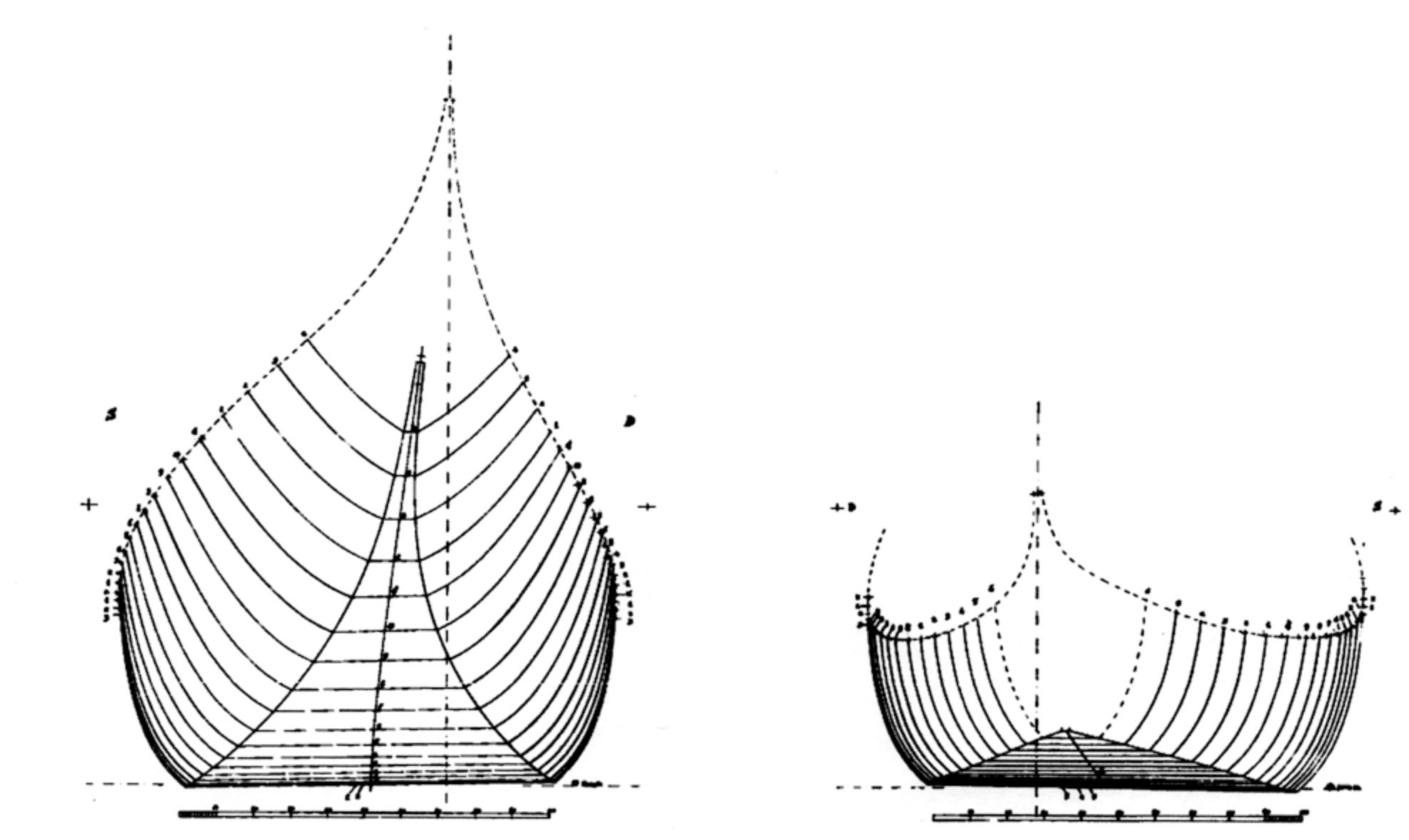
Gondolas, however, are fascinating to me. They are the only watercraft of which I am aware that is purposefully built asymmetrically, to counteract the weight of the gondoliere and the unilateral force from the oar. In fact, if you see a fleet of gondole parked in a row, they all lean to the left when empty.
There was an opportunity to take a rowing lesson with the school Row Venice, but I didn’t want to pack too much into three days. We got on the water anyway.
Founded in 2006 by kayaker Rene Seindal, Venice Kayak was created to allow exploration of the 126 miles of canals (traversed by 472 bridges) to connect a handful of concentrated islands in the city proper.2 Now sold to a new owner, Venice Kayak continues to lead tours of the city from water level.
Our guide was Teresa, a native Venetian and grad student in psychology. Teresa told us that she loves being outside talking to people, and it’s much better than typical student jobs, like working in a restaurant. She wants to be a psychologist. She’s warm and friendly, and is easy to talk to.
After basic instructions (she admitted we might know more than she does, as she was new), Teresa intended to take us down the back streets (canals) where there are fewer tourists, avoiding the mass of gondole that plied the waters closer to Piazza San Marco.
The temperature was cool, so we were the only clients to sign up. She said most people who come before and after summer are outdoors people, and in the summer, there are more people who just want to try something different.
One definitely has a different view of Venezia from a kayak. Even the gondoliere are higher up on their perches, but they’re not connected to the water as much as we kayakers are.
As we approached blind corners, Teresa would call out òe, premando or òe, stagando, Venetian dialect for Hey, I’m turning left, or Hey, I’m turning right. Human-powered traffic always stayed to the left.
Venice has a crumbly beauty that you can see from a lower and slower pace. It’s not that they don’t maintain it; they do, when it’s structural. I look at Venezia like a cast-iron pan. If you make it pretty, you ruin it.
We paddled for over two hours. Teresa told stories that illustrated the way people live and work; where they park their boats, how the supplies make it to the houses and restaurants, how a person moved their household (by boat, turns out), her high school, and the church of Our Lady of the Vegetable Garden. Great story!
We clumsily climbed out of our kayaks, exchanged quick hugs and emails with our guide, and headed on our way.
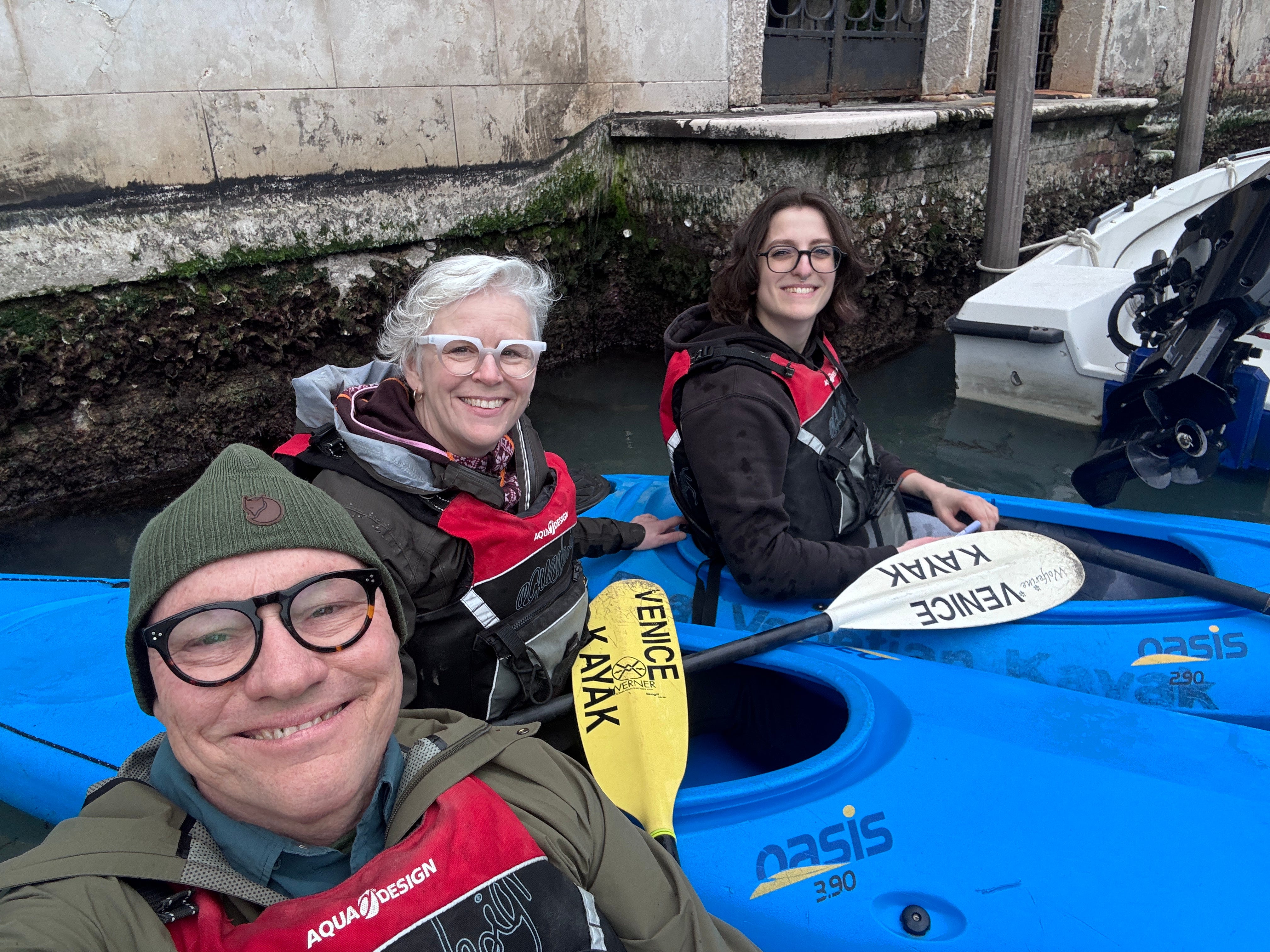
We’ll be back, I’m sure. Maybe with a couple of inflatables so we can get lost. One of my favorite activities.
Next we’re off to Parma, land of cheese and ham. We’re walking 15,000 to 20,000 steps a day, so I’m not concerned about eating whatever I want. Even if I were concerned, I wouldn’t be.
This is like staying This was definitely not made in Asia. Totally Italian.
There are, however, over 100 islands in the lagoon, most small, marshy, and uninhabited. Good duck hunting, I hear.