
the introduction
Nothing to do with paddling here.
Hi, all.
This is the introduction to a book I am writing. It should be self explanatory. Thanks for reading. —DB
According to Italy’s Ministry of the Environment, there are over 5,000 small towns in Italy with less than 2,500 inhabitants. These borghi are often quite remote, with most of them being in the central Apennines in the provinces of Abruzzo and Molise, and the northern Piedmont up in the mountains along the border with Switzerland.
These towns are dying. It might seem strange to start a book with what could be considered a negative statement. Having a family in Italy is expensive, and at this writing the average Italian couple has 1.2 children per woman of childbearing age. Anthropologists agree that the number of children needs to be between 2.1 and 2.7 to maintain a stable population, due to infant and child mortality. Without immigration, Italy is in trouble, losing nearly half of its population every generation.
At the same time, Italy, especially in the Lombardy region of the north, has an anti-immigrant sentiment. That’s a disaster.
When I lived in Sicily in the early 80s, there were plenty of immigrants, mostly Ethiopians and Tunisians. They were treated, as far as I could tell, with tolerance if not affection. Many cultures may feel antipathy toward an entire minority as a group, but they love the individual.
Sicilians are an interesting group. My experience was that they tended to be a little wary of outsiders at first, but once you’re proven worthy of some trust (and you’re not a jerk), you’re accepted. Toss in a few words of Sicilian, and you’re family. Sicilians love being seen. Marginalized by northerners who look upon Sicily as a backwater island, they are surprised and delighted that an American would care enough to travel to their home instead of one of the Big Three; Rome, Florence, and Venice.
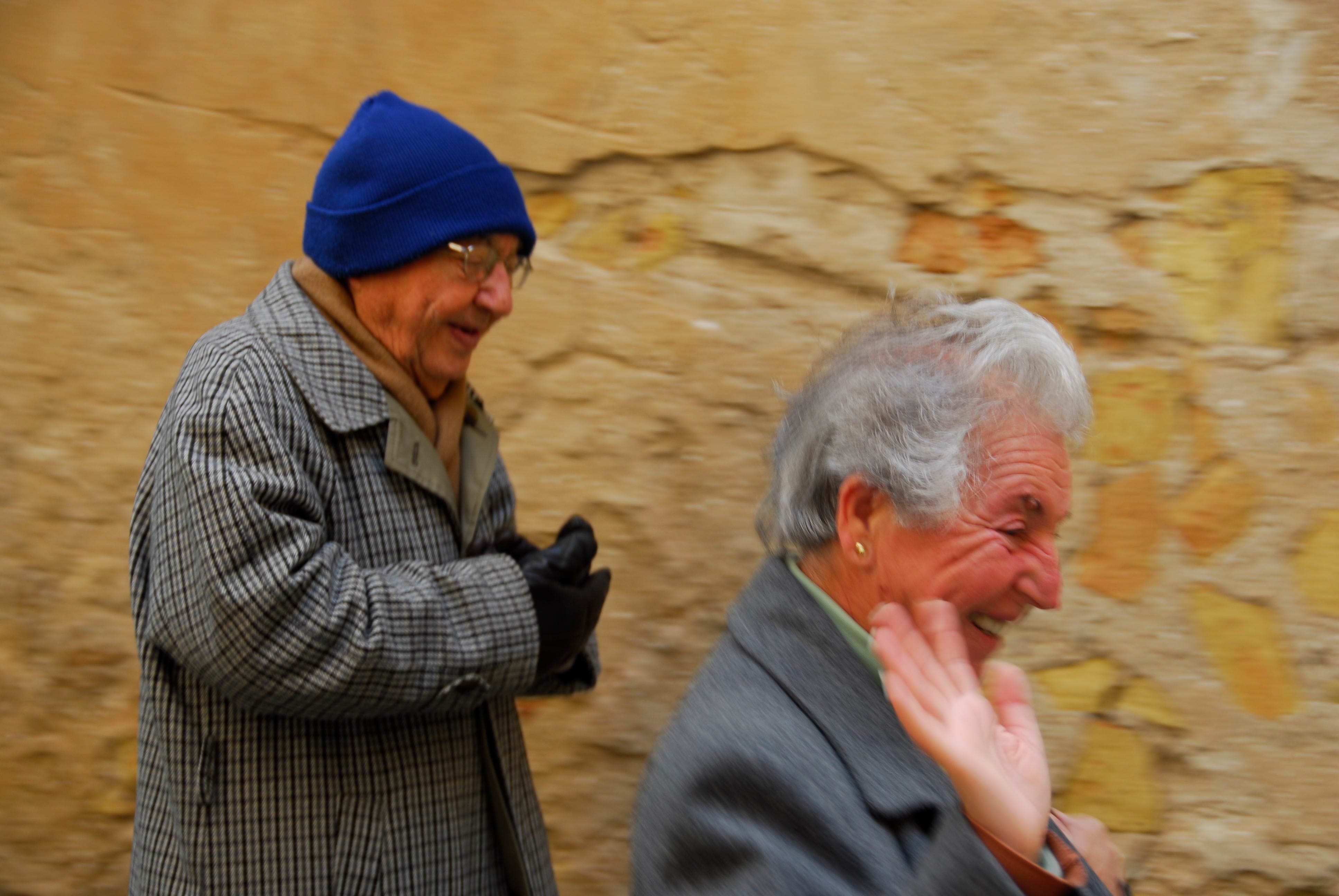
The benefit of staying outside the Big Three is that you’ll have more authentic interactions with curious native folks who are just glad someone considers it worthwhile to see their land, their houses, their faces. Even if you don’t speak Italian, they’ll find a way to welcome you however they can.
Years ago I was driving back roads in central Sicily the day after some heavy rainstorms with my then-teenaged son, Ian. There were mudslides that blocked small roads in their entirety, and we had to poke around to find roads that were open.
We drove through a tiny borgo, one of those where the main highway bisected the town. Population, I dunno. It was near the town of Aidone, that much I remembered.
As two obviously non-Sicilians cruised down the main drag looking for someone to ask for advice, we spotted a nonna. She looked at us without expression until I rolled the window down on our little rental car and greeted her. “Salve, signora. Siamo in un bel pasticcio!” Hello, ma’am, we’re in a bit of a quandary.
She immediately brightened up. A phrase of unexpected Italian will do that to a rural Sicilian.
I told her that some of the roads were blocked by mudslides, and asked if she knew a detour. She did, and as she explained it, two younger men emerged from various doorways. They were probably her sons, or nephews, or random townsfolk; no one said. They provided their unsolicited but strongly-held opinions, and all three of them contradicted each other. It was helpful in the end, and we figured it out. Mille grazie, signora, Lei è molto gentile. Thank you so much, that’s very kind of you. She waved off the thanks and said Prego, signore, di niente. You’re welcome sir, it’s nothing.
There’s a saying in Sicilian that makes me giggle: C’ha’ na leng’, va ‘n Sardegna. Basically, it means if you ask an Italian for directions, you’ll end up in Sardinia. Ask three Italians how to get somewhere and you’ll get five answers. That was certainly true here. In the end, the matriarch gave excellent directions. And to this day, I have no idea where I was, and I probably couldn’t find it again. It doesn’t matter. Those sorts of experiences are not tied to geography. They’re tied to humanity.
She then asked if we wanted to come in for a glass of wine. I said that was very kind, but we were already behind schedule. I don’t drink alcohol, but in retrospect, I should have said yes, just for the story and the company. If I were writing this book then, I would have jumped at the chance. I’ll never know her name. She was wearing the black clothing that signifies mourning, which while uncommon in big cities, is still a tradition in more rural towns. I don’t know her husband’s story, when she was widowed, and what her parents did for a living, if she remembered World War II as a child, etc. If I had accepted her invitation, I would have found out. Note to self: always say yes to an invitation.
Italy isn’t in danger of collapsing. People will always live there. The only thing to determine is the makeup of the population. Fortunately, Sicilians have a generous nature, and their approach to immigration is about as humane as it can be.
The island of Lampedusa is one of the places northern Africans seek by boat when fleeing oppressive regimes, poverty, or famine. The fishermen in Lampedusa are accustomed to rescuing overloaded boats, and unfortunately, recovering bodies of those whose boats didn’t make it.
Lampedusa is only 8 square miles, and it’s closer to Tunisia than Sicily. The Italian government works with the locals to relocate refugees off the island and get them to safety. This acceptance of refugees isn’t surprising to me, as Sicilians have been the underdogs for millennia. They know what it’s like to be desperate.
A small but vocal minority of Italians from the north are not as accommodating of an influx of immigrants. As a result, areas of Lombardy are already seeing their populations drop precipitously. Once you lose critical mass, you lose your clinic, your grocery store, your community center. Churches close, forcing parishes to combine and combine again. No young people to take care of the elderly. No energy from young children. No carrying on traditions indigenous to that specific town.
La Lega (The League) is a conservative, nationalist political party that promotes a less inclusive society, ignoring the fact that their less inclusive society is losing population by half every generation. It used to be called La Lega Nord, but they dropped the North, ironically, to be more inclusive of Italians further south.
La Lega doesn’t have a whole lot of foothold in the south, with younger citizens, or both. In fact, its percentage of membership has dropped down to the mid single digits, a fifth of what it was a few decades ago. Their party membership is dying off, as young Italians are more concerned with economic equity and environmental issues, such as climate change. They are growing up with immigrants. Young people love their Italian traditions, but they also like eating African food.
While Sicily will never have the economic prosperity of the industrial north, I think Sicily will become more and move liveable. It costs less to live there, and their infusion of immigrants will revitalize the workforce and the culture.
This is nothing new. It happened a thousand years ago.
Roger II was the Norman king of Sicily for over 50 years, beginning in 1105. His kingdom was vast, controlling Sicily, Apulia, and Calabria; in effect, the entire southern part of Italy. King Roger was a brilliant administrator, creating one of the most well-functioning bureaucracies in the known world. He invited to his court Greeks, Arabs, and Normans to create a strong central government.
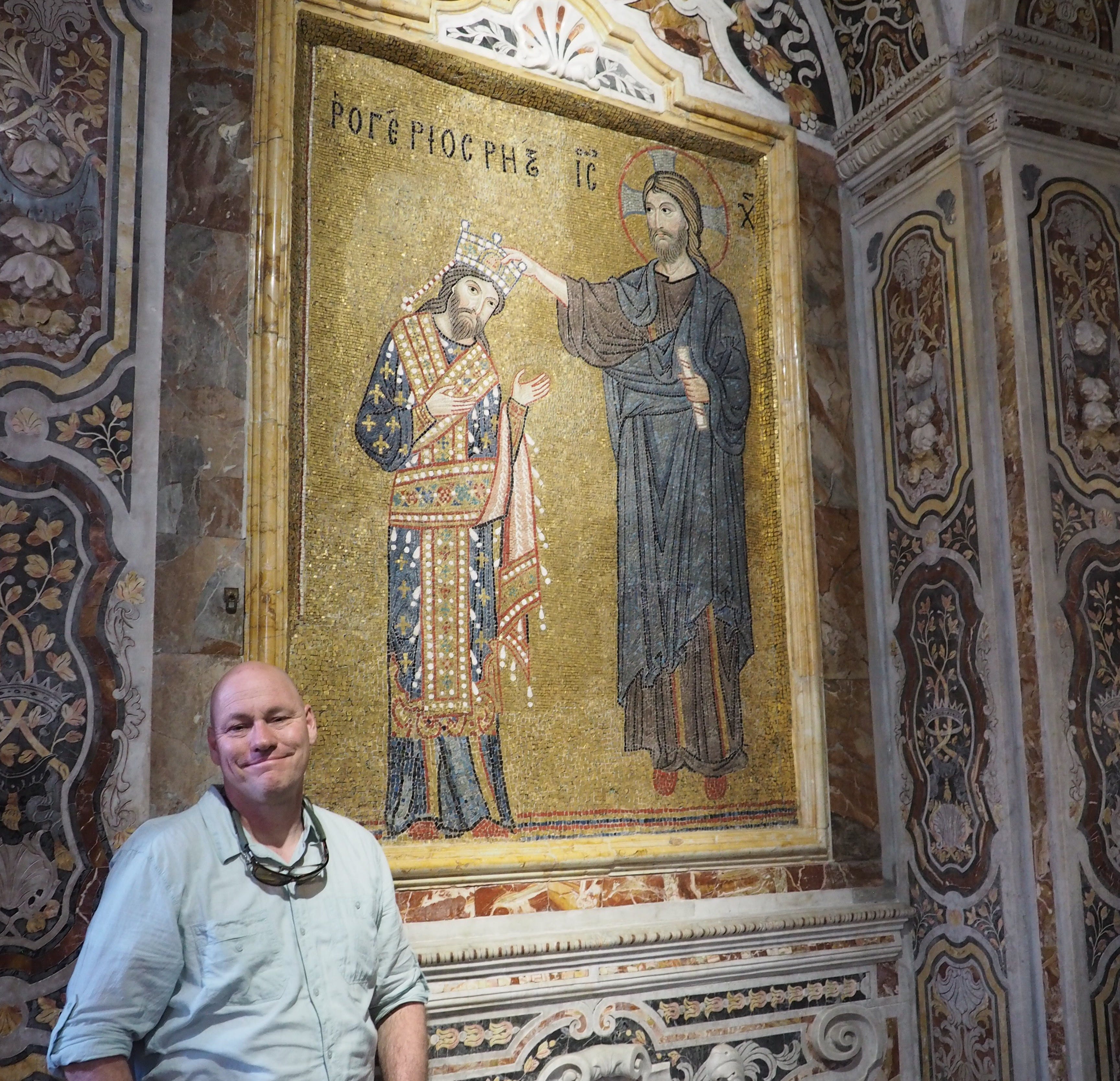
Roger’s court was a study in cultural tolerance and playing people to their strengths. The multi-ethnic and multilingual court allowed an exchange of information and learning. Greeks brought geometry and logic, Arabs brought algebra and astronomy. Everyone was welcome with two rules: Bring your A game, and don’t be a jerk.
The League should learn something from history. Then again, shouldn’t we all?
In 1982 I lived in a Pugliese town called San Severo. It was a modest city, with a population of about 50,000, small enough that you could walk from one end to the other in twenty minutes or so. In the evenings after it cooled off, the main hub of social activity was Piazza Allegata, at least for the older generation. Old pensioners would shuffle into the town square, carrying their wooden folding chairs to the piazza and chat in the cool summer evenings. Many of these folks were veterans of World War II, many with disabilities.
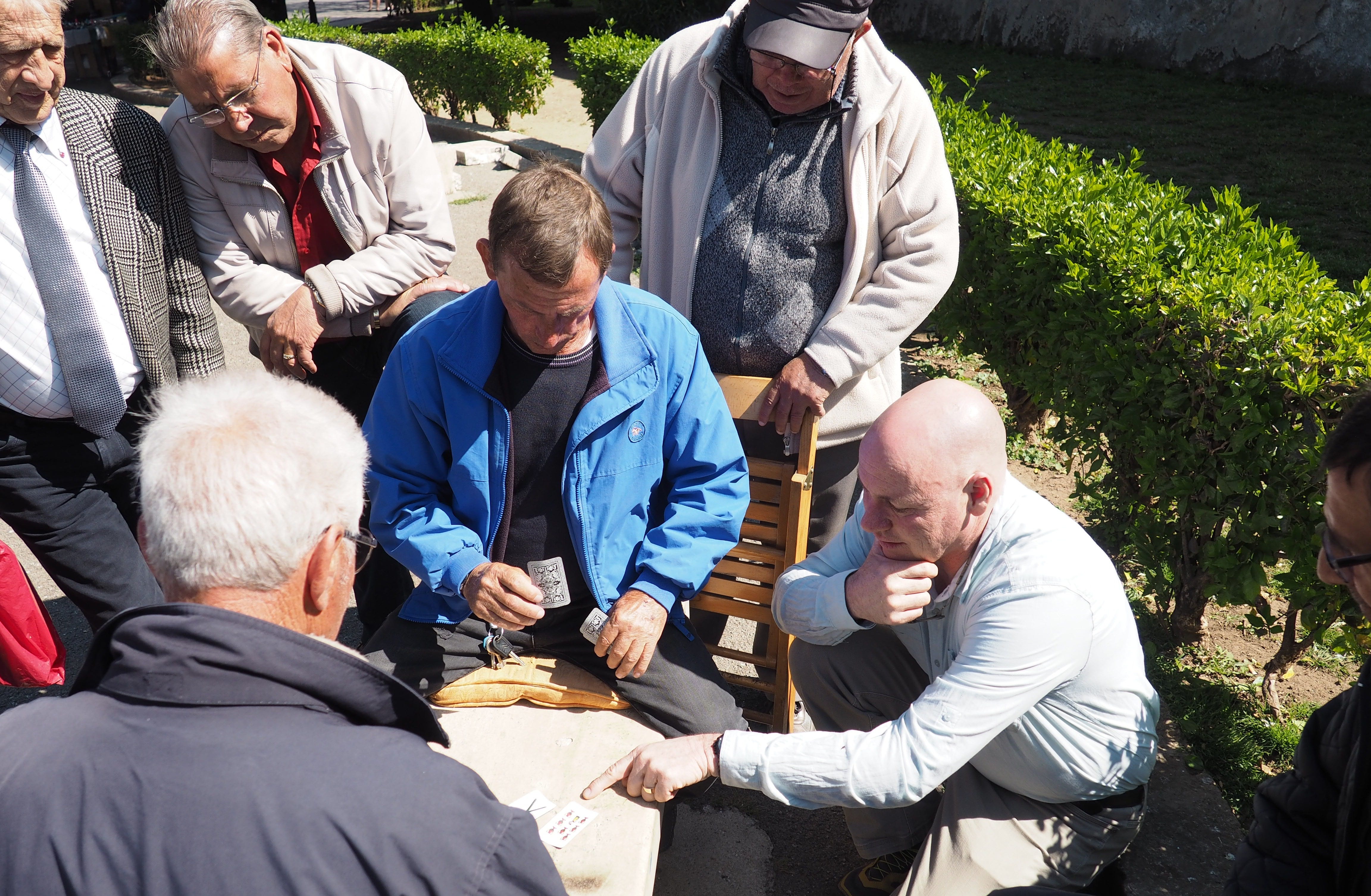
I would sometimes introduce myself and just ask about their personal stories. It was like drinking from a verbal firehose. No one had asked them their stories before: if anything, they were told “Be quiet because no one wants to hear that stuff, Grandpa.”
I wanted to hear it all. I drank it up.
I learned about the black GIs who occupied the town after the Nazis pulled out and headed north. They were not used to the cold, and they’d ask the bakers if they could come in and stand by the ovens. Until 1944, most of them had never seen a black man before. They were kind to them. They chased the Nazis north.
I learned about the scandals in the churches.
I learned how they lost their legs. Their hands. Their eyes. Sometimes their souls.
The best way to preserve the history of a borgo is to visit. Talk with the people who live there before their stories disappear. Each chapter is a story about people and their places. They may crumble both in population and infrastructure, but if I can save their stories, I can save a piece of their history, and their humanity.
So true: “I would sometimes introduce myself and just ask about their personal stories.”
When I bicycled in the Mekong Delta of Vietnam in 2017, a BnB host was anxious to show this veteran of the “American War” his grandfather’s memorial room. I had asked about his story. He thought I might be interested in the story of someone on the other side of the war. He proudly showed me the letters signed by Ho Chi Minh and the medals and pictures.
One of the most amazing, moving moments of a marvelous trip.
Wow! This is fascinating. Incredible what listening can do. Thanks for sharing and enjoy the book process!! BTW, we bought 2 Prospector 13s last Saturday!!